Joints & mobility Symptom
Dog limping: possible causes, what to do and when to see the vet
Is your dog limping but still putting weight on the leg, or not at all? Common causes, what to do straight away and the signs that mean a trip to the vet.
Key takeaways
- A limp is always a sign of pain or discomfort: it isn’t a disease but a symptom, and the cause can range from a grass seed in the paw to a ruptured cruciate ligament.
- A dog that won’t put the leg down at all, has a misshapen or very swollen leg, or is limping after a knock or accident needs to be seen urgently.
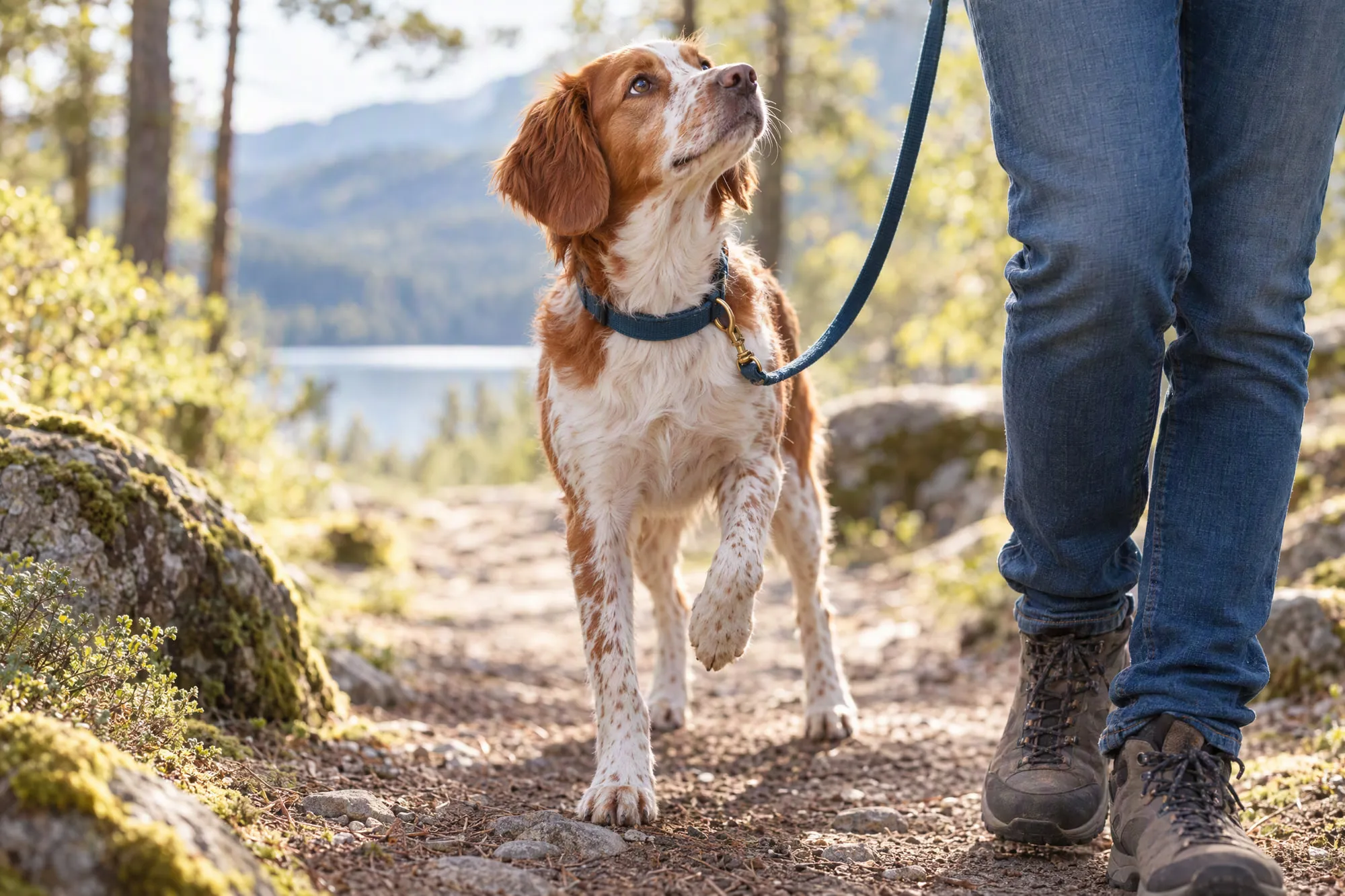
- If your dog is limping but still putting weight on the leg and otherwise well, check the paw, keep it on lead rest for 24 to 48 hours and see your vet if the limp persists or comes back.
- Never give human painkillers: paracetamol, ibuprofen and aspirin are dangerous for dogs.
- A video of your dog limping at home is a huge help to your vet in making a diagnosis.
Contents
A dog limping is in pain or discomfort somewhere in a leg, a joint or the back. If your dog won’t put the leg down at all, if the leg looks misshapen or very swollen, or if it is limping after a knock or accident, see a vet urgently. If it is limping but still putting weight on the leg and is otherwise well, start by checking the paw, keep it on lead rest for 24 to 48 hours, and book an appointment if the limp doesn’t go away. Here’s how to assess the situation, identify the most likely causes and know what to do.
My dog is limping: is it an emergency?
The first question isn’t ‘why’ but ‘how bad’. Limping isn’t a disease: it’s a symptom, your dog’s way of protecting a painful area. How serious it is depends on three things: whether the dog bears weight on the leg, how the limp started and how the dog is in itself.
| Situation | What to do | When |
|---|---|---|
| Not putting the leg down at all, leg misshapen, bone visible, heavy bleeding | Vet practice or out-of-hours emergency vet | Immediately |
| Limping after an accident, a fall or a fight | Vet appointment, even if your dog seems fine | The same day |
| Very swollen, hot joint, fever, lethargy, refusing food | Vet appointment | The same day |
| Putting weight on the leg but clearly limping, dog otherwise well | Lead rest, check the paw | See the vet if no improvement in 24 to 48 hours |
| Mild limp that keeps coming back, or stiffness on getting up | Routine appointment | Within the week |
How to tell which leg your dog is limping on
It isn’t always obvious. Watch your dog walk and then trot slowly in a straight line, ideally filmed from the front, from behind and from the side.
- Front leg limp: the head lifts as the sore leg touches the ground and drops onto the sound leg. This is known as ‘head bobbing’.
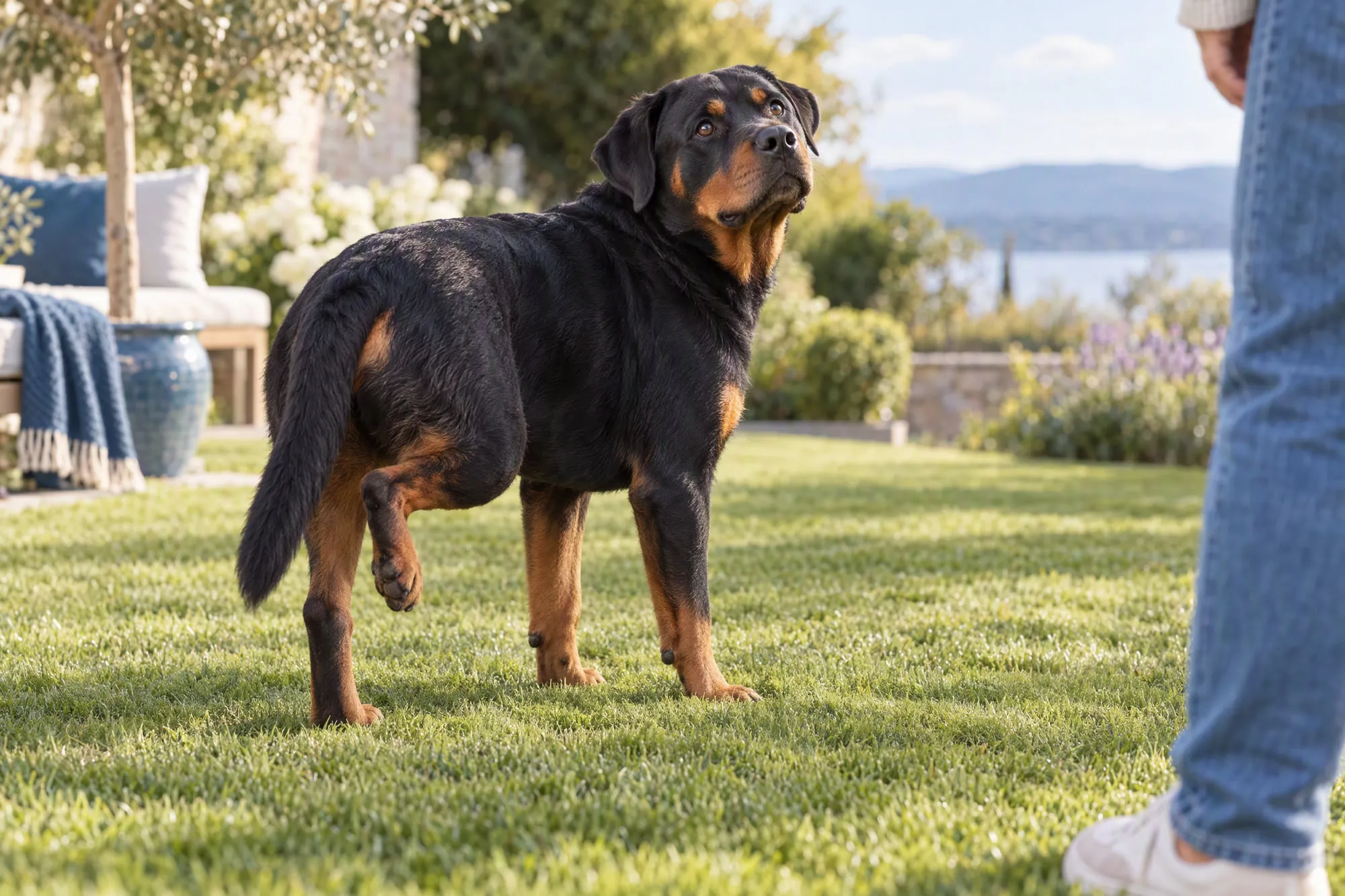
- Back leg limp: the hip on the painful side rises higher, the stride is shorter, and the dog shifts its weight forwards.
- At rest: the dog rests the leg on its toe tips, sits lopsidedly with one leg stuck out to the side, or always lies on the same side.
- Both back legs: a stiff gait, ‘bunny hopping’ (both back legs moving forward together), difficulty getting up. Think hips, both knees or the back.
Dog limping but still putting weight on the leg: what does it mean?
This is the most common situation, and the most reassuring… as long as it doesn’t last. A dog that still puts weight on the leg often has a less serious injury than one holding the leg up: a small cut, a thorn, a mild sprain, muscle soreness after exercise. These limps usually clear up within one to three days of rest.
But ‘putting weight on it’ doesn’t mean ‘nothing serious’. Several significant conditions cause a weight-bearing limp:
- a partial cruciate ligament tear, which often goes on to rupture completely;
- a luxating patella (slipping kneecap), especially in small dogs;
- arthritis and dysplasia (hip or elbow), which develop over months;
- more rarely, a bone tumour in an older large-breed dog, which starts with a subtle limp.
Remember this simple rule: a limp that lasts more than 48 hours, or that keeps coming back, always deserves an examination, even if your dog is putting weight on the leg.
The most common causes of limping in dogs
Sudden limping
It comes on all at once, often after a walk, a game or a jump.
- Paw problem: a grass seed lodged between the toes (very common from May to September), a cut pad, a broken or torn claw, an insect sting, a foreign body.
- Soft tissue injury: sprain, muscle strain, tendinitis.
- Cruciate ligament rupture: the dog suddenly holds up a back leg, often after a quick start or a tight turn.
- Fracture or dislocation after a knock: severe pain, a leg that won’t bear weight.
- Abscess after a bite: the limp gets worse over two or three days, with a hot swelling.
Gradual limping
It develops over weeks or months, and is often worse on getting up or after exercise.
- Arthritis, the most common cause in adult and senior dogs.
- Hip or elbow dysplasia, in young large-breed dogs.
- Chronic cruciate ligament injury.
- Back or neck problem (slipped disc, trapped nerve): the pain ‘radiates’ down a leg.
- Bone tumour, to consider in an older large dog whose limp gets worse despite rest.
Dog limping on a front leg
| Age | Most common causes |
|---|---|
| Puppy and young dog (under about 18 months) | Elbow dysplasia, osteochondrosis of the shoulder, panosteitis (‘growing pains’), injury |
| Adult | Paw or toe injury, wrist sprain, shoulder tendinitis, elbow arthritis |
| Older dog | Elbow or shoulder arthritis, neck pain, bone tumour (large breeds) |
Dog limping on a back leg
| Age | Most common causes |
|---|---|
| Puppy and young dog | Hip dysplasia, luxating patella, panosteitis, femoral head necrosis (small breeds) |
| Adult | Cruciate ligament rupture (by far the most common), luxating patella, paw injury |
| Older dog | Cruciate ligament rupture, hip or knee arthritis, slipped disc, bone tumour |
To find out more, read our guides to cruciate ligament rupture in dogs, luxating patella in dogs and hip dysplasia in dogs.
My dog is limping: what should I do straight away?
If it isn’t an emergency, here’s what to do, step by step.
- Calm things down. Stop the walk or game and head home at a walk, on the lead.
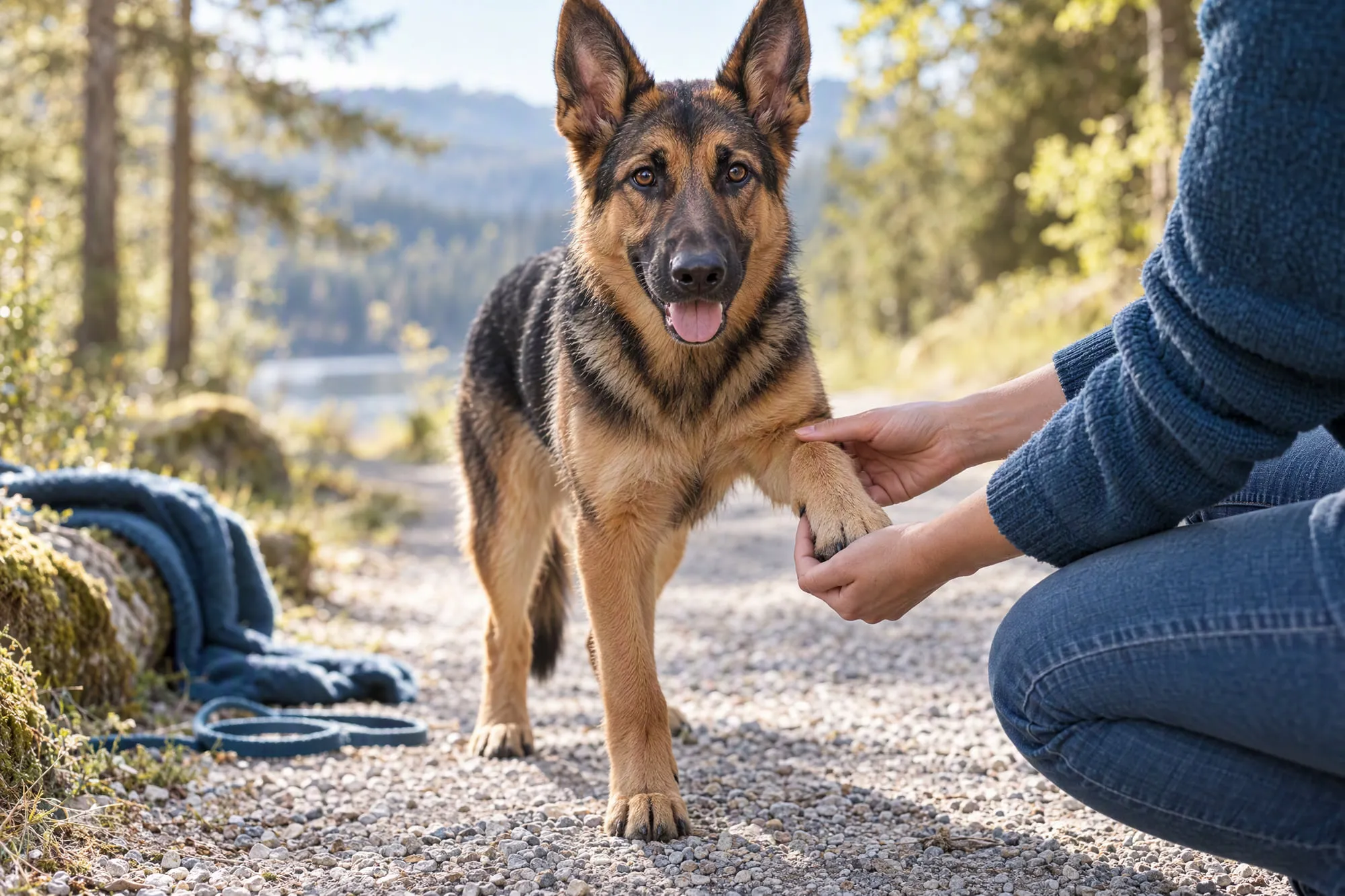
- Check the paw somewhere well lit. Gently spread the toes, look between the pads, check each claw, and look for a wound, a thorn, a grass seed, or a red or swollen area. A dog that licks its paw intensely is often pointing you to the spot.
- Feel the leg gently, from the toes upwards, comparing with the other side: warmth, swelling, a pain reaction. Stop if your dog growls or tenses; a dog in pain may bite, even its owner.
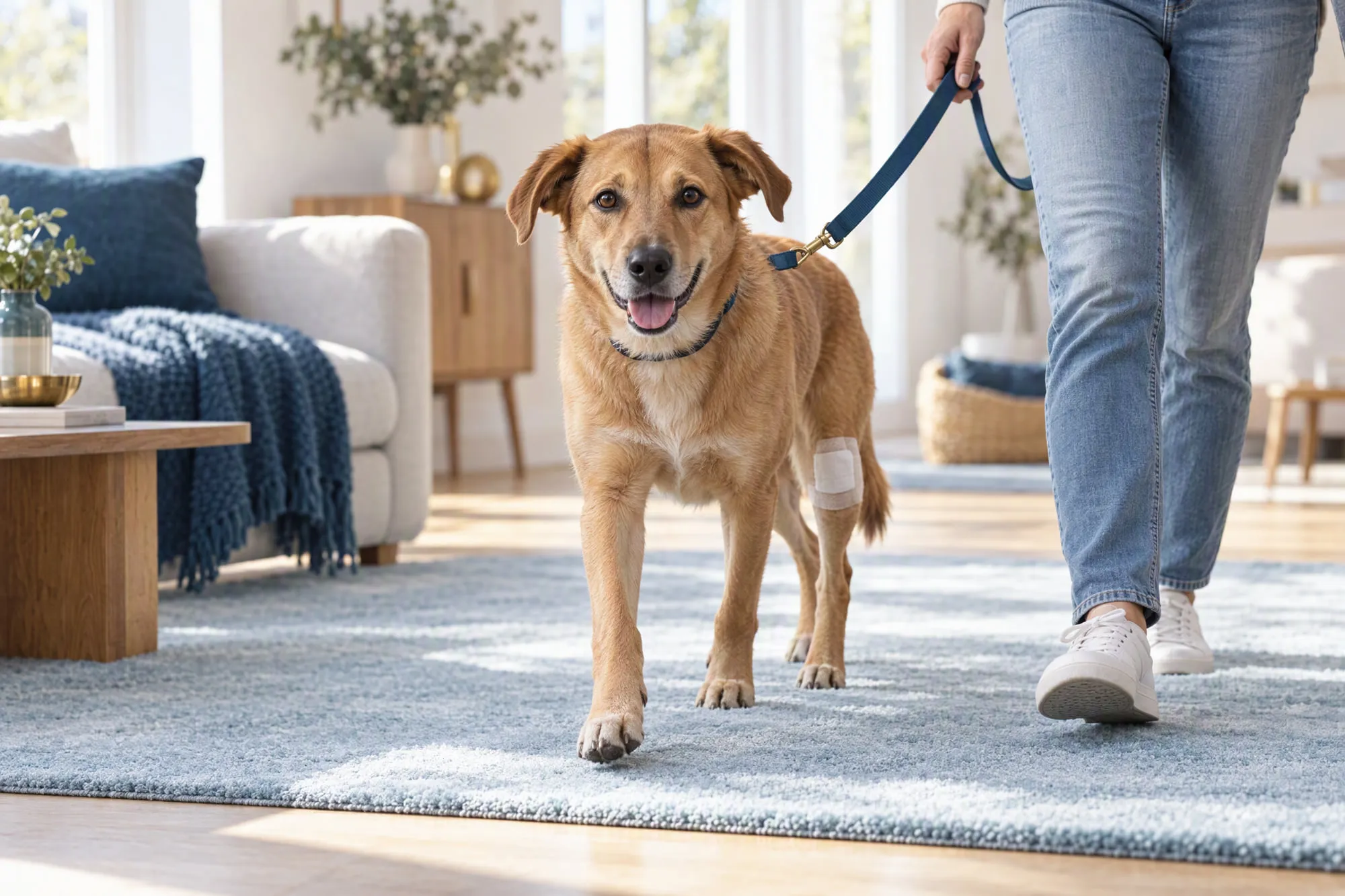
- Keep it on strict lead rest for 24 to 48 hours: short outings for toilet breaks only, no stairs, no jumping on the sofa, no playing with other dogs.
- Film the limp at a walk and a trot. At the vet practice, excitement often makes the limp disappear.
- Note the circumstances: since when, after what kind of exercise, whether it’s worse on getting up or after exercise.
- Reassess after 24 to 48 hours. If the limp hasn’t clearly improved, book an appointment.
Small things that help
- A cold pack wrapped in a cloth, for 10 minutes two or three times a day, can soothe a sprain or a recent knock, if your dog accepts it.
- A comfortable bed and a floor that isn’t slippery: put a rug down where your dog gets up and lies down.
- A small, superficial cut on a pad can be rinsed with sterile saline; a deep wound or one that bleeds heavily should be seen by your vet.
At the vet: diagnosis and treatment
Your vet will start by asking you some specific questions, then watch your dog walk and trot. Next comes an orthopaedic examination (feeling and moving each joint, checking for instability or pain) and often a neurological examination, because some limps come from the back or neck.
Depending on the case, your vet may suggest:
- X-rays, often under sedation so that your dog is relaxed and comfortable;
- an ultrasound, CT scan or MRI for soft tissues, the spine or difficult cases;
- a blood test or a joint fluid sample if an infection or inflammatory disease is suspected.
Treatment depends entirely on the cause: simple rest and a veterinary painkiller for a sprain, removal of a grass seed, antibiotics for an abscess, surgery for a cruciate ligament rupture or some dislocations, and long-term management for arthritis, combining pain control, weight management and suitable exercise. Physiotherapy often speeds up recovery.
Preventing limping day to day
You can’t avoid everything, but you can reduce the risks considerably.
- Keep your dog at a healthy weight: excess weight increases the risk of cruciate ligament rupture and speeds up arthritis.
- Warm your dog up with a few minutes of walking before energetic play, and avoid sudden intense exercise ‘from cold’ or after days of inactivity.
- Check the paws after every walk in summer: grass seeds are one of the leading causes of sudden limping.
- Keep claws short: an overlong claw changes how the foot bears weight and breaks more easily.
- Protect large-breed puppies while they grow: no repeated jumping or intense exercise before growth is complete. See our guide to large breed puppy joints.
- See your vet early for any limp that lingers: dealing with a joint injury quickly limits the arthritis that may follow.
Key points when your dog is limping
A limp is your dog telling you it’s in pain. First, assess the urgency: a leg that no longer touches the ground, a knock, a deformity or a dog that’s flat and subdued means seeing a vet straight away. Otherwise, check the paw, give 24 to 48 hours of lead rest, with no human medicines at all, and have your dog examined if the limp persists or comes back. A limp that creeps in gradually in an adult or older dog is often linked to arthritis: our complete guide to arthritis in dogs explains how to support your dog day to day. You’ll also find all our advice in our dog joint health section.
Frequently asked questions
My dog is limping but doesn’t seem to be in pain. Is it serious?
A dog that limps is almost always in pain, even if it doesn’t whimper: it is simply taking weight off the sore leg. If the limp is mild and your dog is otherwise well, you can keep an eye on it for 24 to 48 hours of rest. Beyond that, or if the limp keeps coming back, book an appointment to find the cause.
How long should I wait before taking a limping dog to the vet?
For a mild limp with no knock or wound, in a dog that is eating and happy, wait no more than one to two days of rest. If the limp doesn’t ease, gets worse or comes back, book an appointment. On the other hand, a leg that no longer touches the ground, an obvious deformity or severe pain warrant a vet visit the same day.
What can I give my dog for a limp?
Nothing from your medicine cabinet: human painkillers such as paracetamol, ibuprofen or aspirin can cause ulcers and kidney or liver damage in dogs. Lead rest and a comfortable bed are the only risk-free measures. If your dog is in pain, your vet will prescribe a suitable veterinary painkiller.
Why is my dog limping after sleeping?
A limp or stiffness on getting up that eases after a few minutes of walking strongly suggests arthritis. In a young large-breed dog it can also point to dysplasia, or to a cruciate ligament injury. It’s a sign of chronic pain that deserves an examination, because it can be managed well once diagnosed.
My dog limps on and off. What could it be?
A limp that comes and goes is common with arthritis and with partial cruciate ligament tears. In a small dog that suddenly runs on three legs for a few seconds and then carries on normally, a luxating patella is a likely suspect. A limp that moves from leg to leg, especially with a fever, needs to be seen promptly.
This article is for information only and does not replace a veterinary consultation. If in doubt, or if your dog is in pain or changes suddenly, contact your vet.