
Large breed puppy joints: how to protect them while your puppy grows
Stairs, exercise, feeding and screening: practical advice to protect your large breed puppy’s joints throughout growth, from 8 weeks to adulthood.
Dog health
The first months matter enormously for joints, especially in large breeds: diet, activity and screening lay the foundations.
Our advice to support your puppy’s growth without overdoing it, or worrying needlessly.

Stairs, exercise, feeding and screening: practical advice to protect your large breed puppy’s joints throughout growth, from 8 weeks to adulthood.
Growth is a decisive period for the joints, especially in large and giant breeds, whose skeleton develops over 12 to 24 months. Growing too fast, too much calcium or energy, and unsuitable exercise can encourage conditions such as hip or elbow dysplasia in predisposed puppies.
The right habits are simple: a growth food suited to the expected adult size, fed in measured amounts to keep the puppy lean; no calcium supplements without veterinary advice; free, varied activity rather than long runs, repeated jumping or unlimited stairs; and, for the breeds concerned, dysplasia screening as recommended by the breed club.
If you are choosing a puppy from a predisposed breed, ask the breeder for the parents’ screening results: it is one of the best ways to reduce the risk.
A few steps now and then are not a problem, but during growth it is best to avoid repeatedly going up and down stairs and jumping off the sofa or out of the car, particularly in large breeds. Carry your puppy or fit a stair gate if needed.
A widely quoted rule suggests about 5 minutes of on-lead walking per month of age, once or twice a day, on top of free play. It is not a strict scientific rule: adapt it to the breed, your puppy’s tiredness and your vet’s advice.
A puppy fed a complete, balanced growth food generally does not need a supplement, and some additions, such as calcium, can even be harmful in excess. Ask your vet before giving anything.


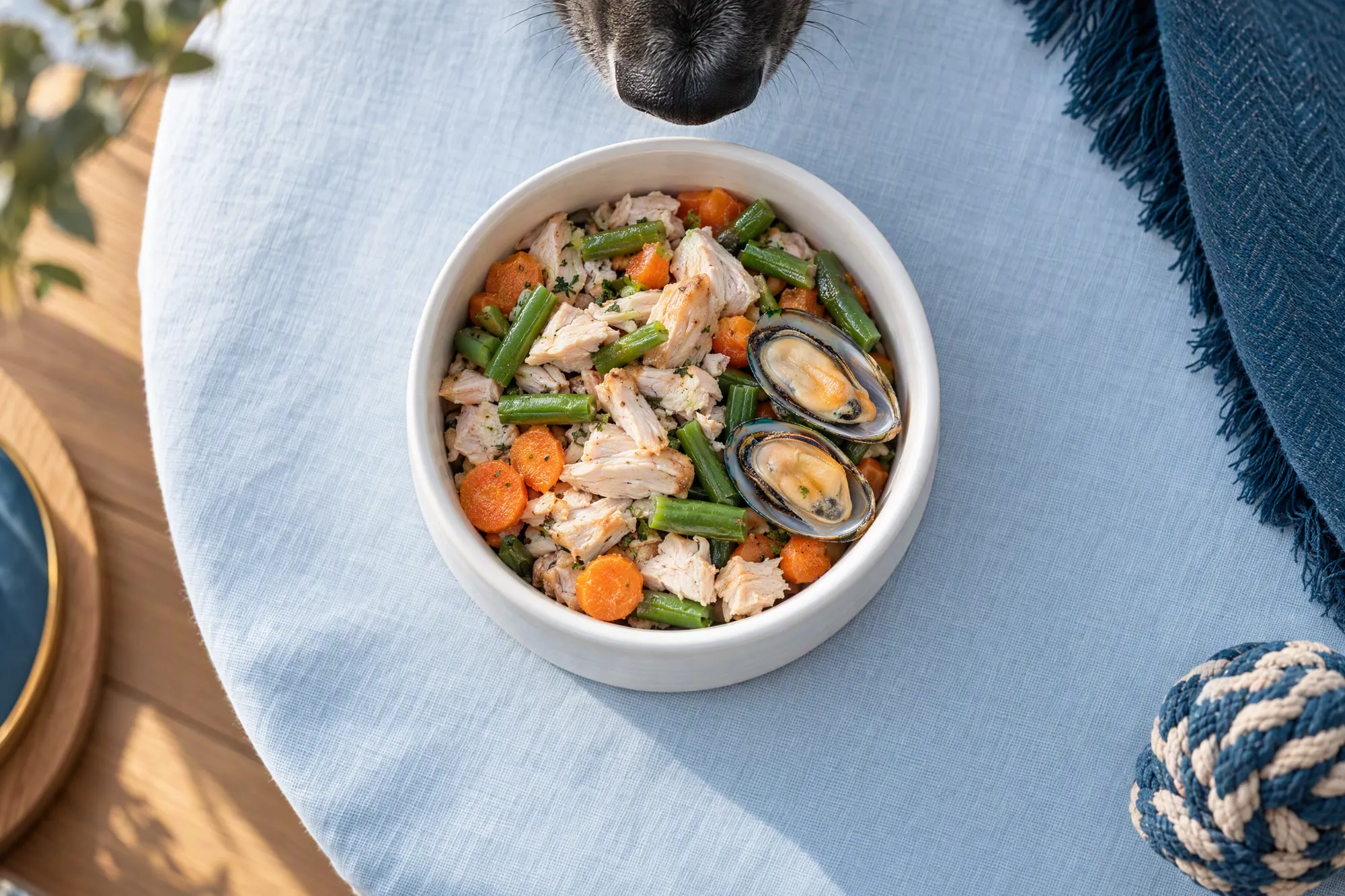
Healthy weight, green-lipped mussel, omega-3: what really matters.
6 articles