Dog physiotherapy and hydrotherapy: what they do and what to expect
Dog physiotherapy explained: rehab exercises, underwater treadmill, swimming, laser. What it helps, what a session involves, costs and finding a practitioner.
Dog health
Movement is one of the best friends of healthy joints: strong muscles stabilise and protect. The key is moving the right way.
Find step-by-step routines you can do at home in a few minutes, plus clear explanations of professionally guided rehabilitation.
Dog physiotherapy explained: rehab exercises, underwater treadmill, swimming, laser. What it helps, what a session involves, costs and finding a practitioner.
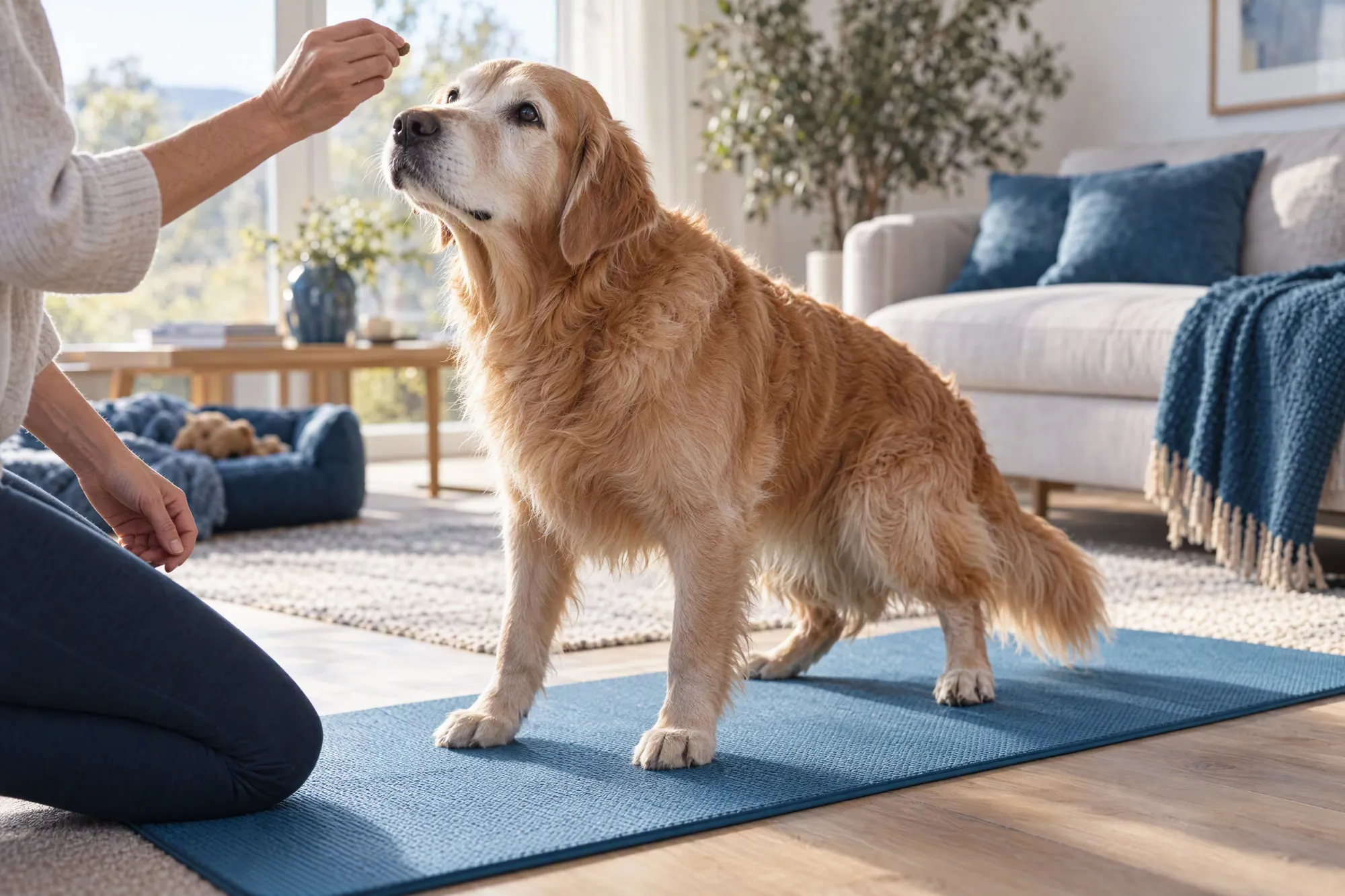
Exercises for dogs with arthritis: 10 gentle routines to do at home, a warm-up, a 7-day plan and the warning signs that mean it’s time to stop a session.
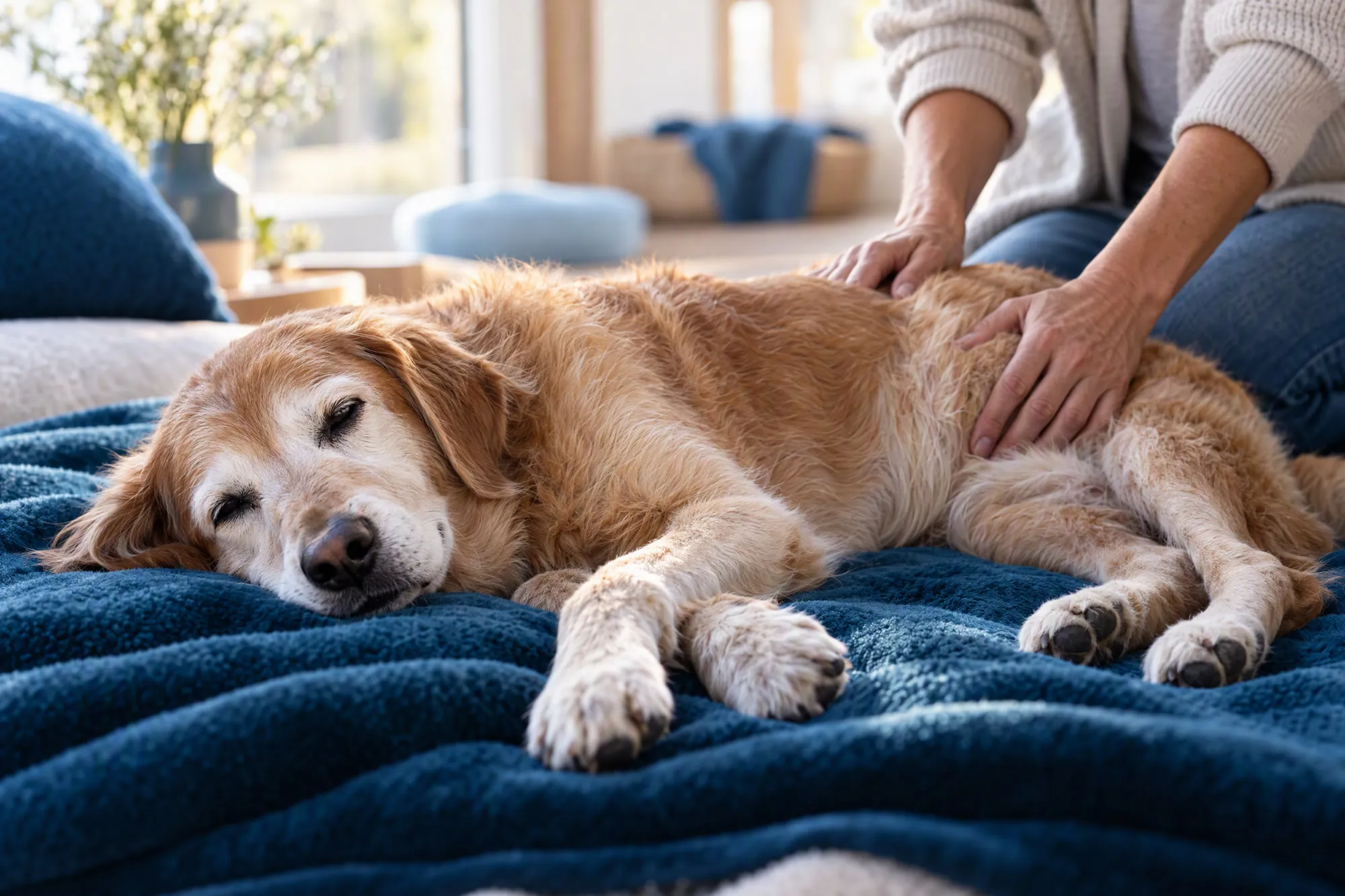
Massage for dogs with arthritis: 6 step-by-step techniques, heat or cold, gentle stretches and the mistakes to avoid so your dog can relax safely.
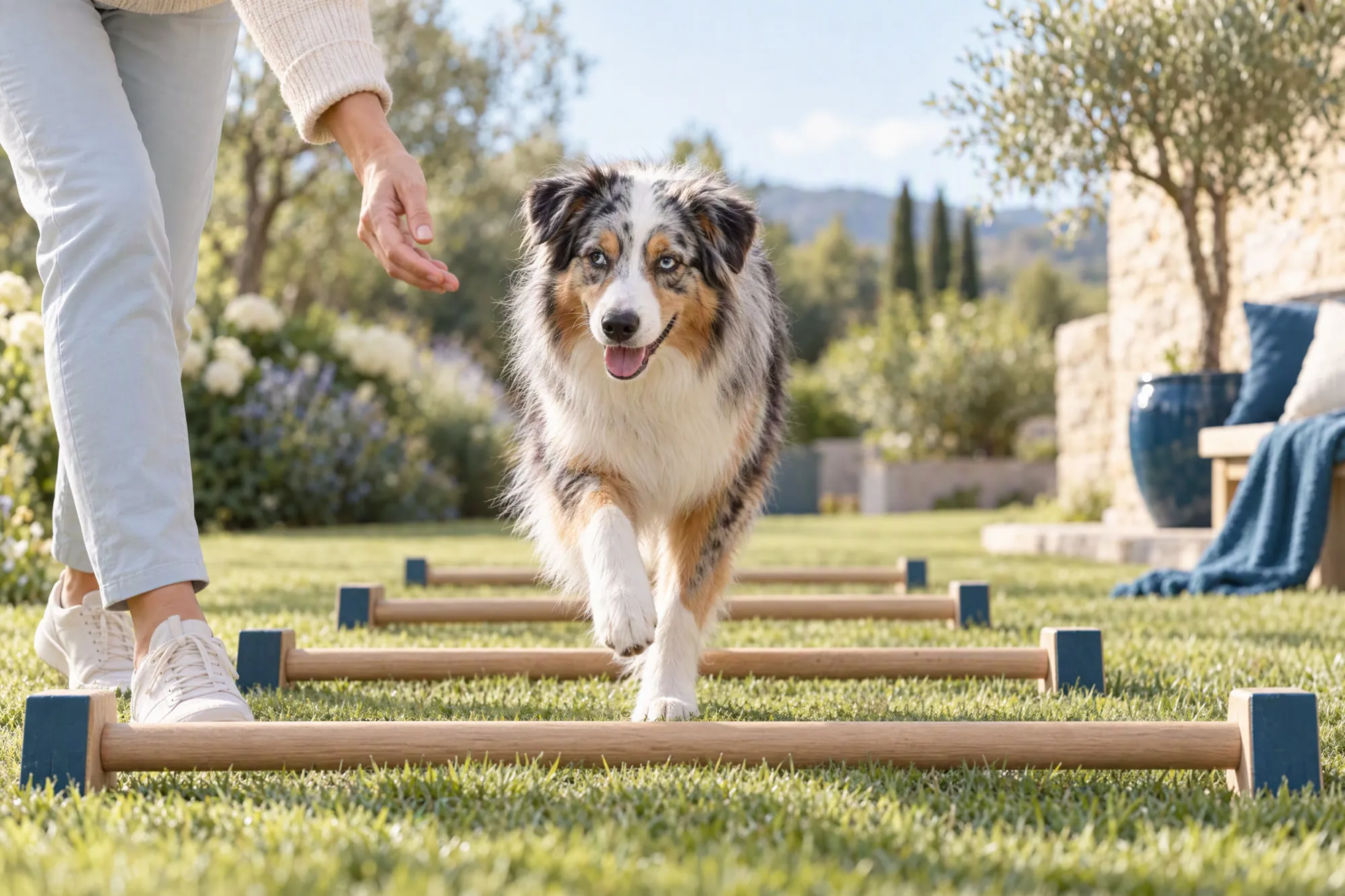
Toned muscles stabilise the joints and take some of the strain off them. For a dog with arthritis, an older dog or one that is convalescing, the aim is not to tire the dog out but to keep them moving often, gently and in varied ways: weight shifts, slow walking on different surfaces, stepping over low poles, active stretches.
Before you start, ask your vet, especially after surgery or if your dog is in acute pain. Begin with short sessions of 5 to 10 minutes on a non-slip floor and build up gradually. A good session ends with a relaxed dog, never lame or out of breath; if the limp is worse the next day, reduce the intensity.
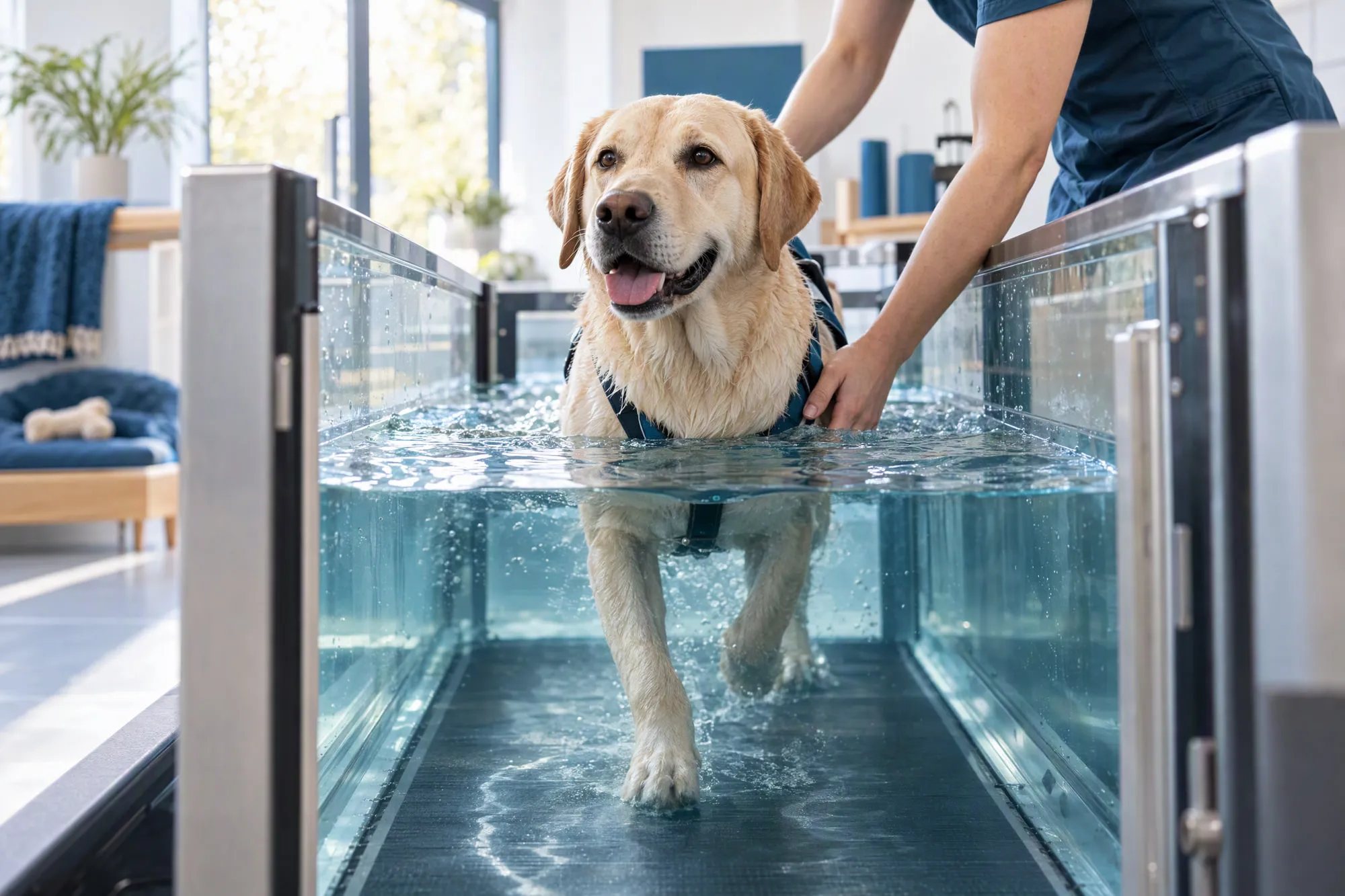
For dogs recovering from surgery or in significant pain, physiotherapy and hydrotherapy guided by a professional make it possible to work safely: underwater treadmill, balance exercises, massage and other techniques chosen case by case.
Several short sessions are better than one long outing: for example two or three calm walks and 5 to 10 minutes of targeted exercises a day, adjusted to what your dog can tolerate. Regularity matters more than duration.
Swimming and walking in water take body weight off the joints while working the muscles, which makes them worthwhile activities for many dogs with arthritis. They should be supervised: warm water, easy entry and exit, short sessions, and veterinary advice if your dog has back problems or is convalescing.
Gentle massage can relax tight muscles around painful joints and strengthen your relationship with your dog. It complements, but does not replace, the care prescribed by your vet; avoid any area that is painful, warm or swollen.
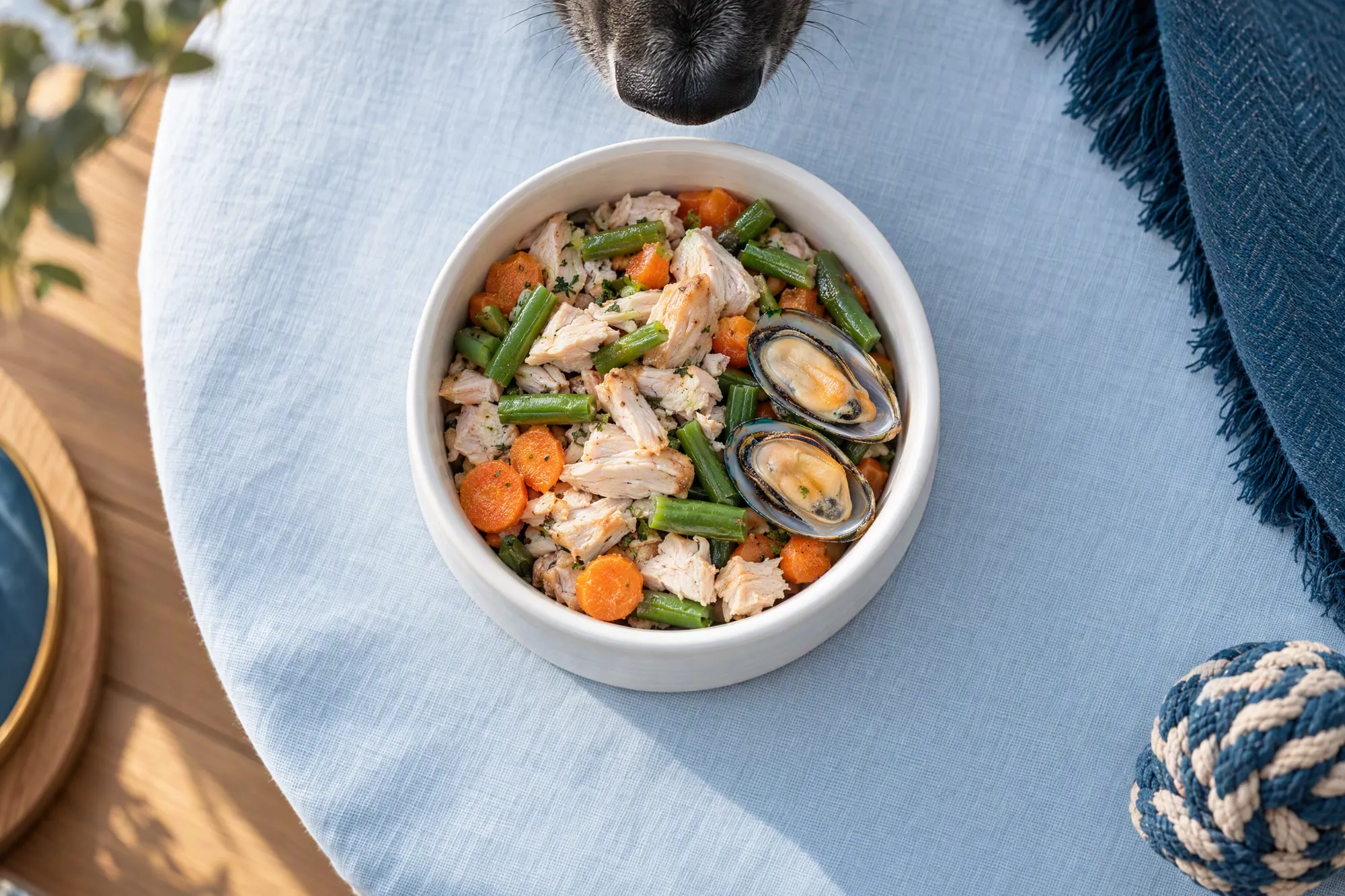
Healthy weight, green-lipped mussel, omega-3: what really matters.
6 articles