Exercise & rehab Guide
Dog physiotherapy and hydrotherapy: what they do and what to expect
Dog physiotherapy explained: rehab exercises, underwater treadmill, swimming, laser. What it helps, what a session involves, costs and finding a practitioner.
Key takeaways
- Dog physiotherapy is rehabilitation through movement: therapeutic exercise, hands-on techniques and physical modalities (water, heat, laser, electrical stimulation) to reduce pain and rebuild muscle and mobility.
- It is used for dogs recovering from surgery (cruciate ligament, slipped disc), dogs with arthritis or hip dysplasia, older dogs and sporting dogs, always after a veterinary diagnosis.
- An underwater treadmill takes weight off the limbs depending on the water level (by around 60% with water at hip height) while keeping a natural walking pattern; swimming works the body with no weight-bearing at all.
- Laser and electrotherapy are add-ons: the evidence is encouraging for some, still limited or mixed for others.
- In the UK, your vet must agree to treatment by a non-vet; voluntary registers (RAMP, ACPAT, the Canine Hydrotherapy Association) help you check a practitioner’s training. Fees vary widely: ask for a written quote.
Contents
Dog physiotherapy is rehabilitation through movement: a trained practitioner assesses your dog, then combines therapeutic exercise, hands-on techniques and physical modalities (water, heat, cold, laser, electrical stimulation) to ease discomfort, rebuild muscle and restore better mobility. Hydrotherapy, on an underwater treadmill or in a pool, is its best-known tool. Here is what these therapies are for, what happens during a session, what the evidence says about each technique, what it costs and how to choose a practitioner you can trust in the UK.
What exactly is dog physiotherapy?
In people, we simply call it physiotherapy. For dogs, you will also see the terms veterinary physiotherapy, canine rehabilitation or simply “rehab”. The aim is always the same: to help your dog move better, with less pain, and regain independence in everyday life.
Which dogs can benefit?
- After orthopaedic surgery: cruciate ligament rupture, fractures, luxating patella, hip replacement.
- After a neurological problem: a slipped disc (IVDD), whether operated on or not, weakness or paralysis of the back legs.
- With chronic joint disease: arthritis, hip dysplasia or elbow dysplasia.
- Older dogs that are losing muscle and balance.
- Overweight dogs, to help them move without overloading their joints.
- Sporting dogs (agility, canicross, working dogs), for injury prevention and return to activity after injury.
What a canine rehabilitation practitioner actually does
- Assesses: watches how your dog walks and gets up, feels the muscles, measures joint angles with a goniometer, measures thigh circumference and assesses pain.
- Sets measurable goals: for example, “get back into the car using a ramp within 6 weeks” or “put proper weight on the operated leg at a walk”.
- Delivers treatment: therapeutic exercise, massage, joint mobilisation, hydrotherapy and, where appropriate, equipment such as laser.
- Teaches you: most rehabilitation happens at home, with a tailored exercise programme.
- Reassesses regularly and adjusts the programme, in contact with your vet.
What happens during a dog physiotherapy session?
The initial assessment
Allow 60 to 90 minutes as a rule. The practitioner takes your dog’s history, reviews the reports and X-rays sent by your vet, watches your dog walk and stand up, then examines them. They will then explain the proposed plan: number of sessions, techniques to be used and exercises to do at home. Bring your dog’s usual harness, their favourite treats and a list of their medication.
Follow-up sessions
These usually last 30 to 60 minutes. A typical session starts with a short warm-up or massage, continues with land-based exercises (poles, balance boards, sit-to-stand) and/or time on the underwater treadmill, and ends with a cool-down. The practitioner uses each session to check your home exercises and progress them.
How many sessions should you expect?
As a rough guide:
- after orthopaedic surgery: one or two sessions a week for 6 to 12 weeks;
- for a dog with arthritis: a closer-together initial block (for example one session a week for 4 to 8 weeks), then maintenance every 2 to 6 weeks;
- after a slipped disc: the frequency depends a great deal on the neurological damage and may be more intensive at first.
Hydrotherapy for dogs: underwater treadmill or swimming?
Water has three valuable properties in rehabilitation. It supports part of the dog’s weight, which takes load off the joints. It provides gentle resistance to movement, which builds muscle. And, when warmed, it relaxes the muscles.
The underwater treadmill
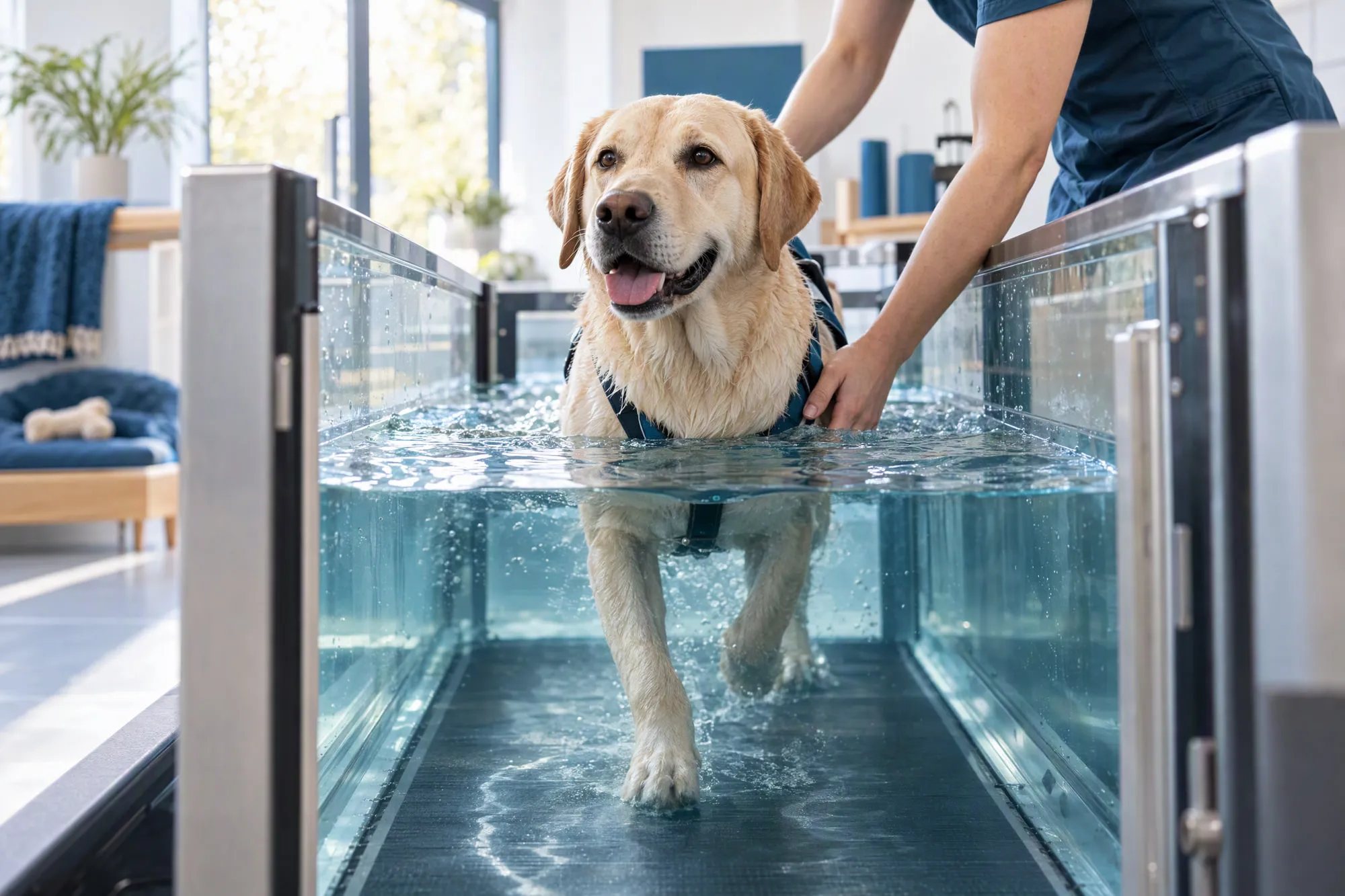
Your dog walks into a glass-sided tank fitted with a treadmill. The tank fills with warm water, usually around 28 to 32 °C, up to the chosen height, then the belt starts at a slow speed. The practitioner stands alongside, sometimes in the water, to guide and reassure your dog.
Water height is the main setting. A study in healthy dogs measured the load borne by the legs at different levels of immersion:
| Water height | Reduction in load on the legs | Main benefit |
|---|---|---|
| Hock | About 9% | Work close to walking on dry land, more joint flexion |
| Stifle (knee) | About 15% | Strengthening with moderate unloading |
| Hip | About 62% | Major unloading, ideal for a dog in pain or very weak |
The big advantage of the underwater treadmill is that it keeps a natural walking pattern at a fully controlled speed. That is why it is used so widely after knee surgery and for dogs with arthritis.
Swimming in a pool
When swimming, the dog has no contact with the ground: the joints bear no load and the cardiovascular effort is considerable. Swimming is excellent for maintaining fitness and muscle without impact. It mainly works the shoulders and front legs and does not reproduce walking, so it is less suitable when the goal is to relearn how to put weight on a leg. At a centre, the dog wears a buoyancy aid and has a ramp to climb out.
Spa baths and “balneotherapy” for dogs: what are they?
Spa or whirlpool baths, sometimes with jets and sometimes marketed as balneotherapy, are mostly offered for relaxation or hygiene. Some centres also use these words to mean hydrotherapy. Before booking, ask whether the session includes supervised active work (walking or swimming) and who runs it.
| Method | Load on the joints | Muscle work | Common uses |
|---|---|---|---|
| Underwater treadmill | Reduced, adjustable by water height | Controlled, targeted walking | After surgery, arthritis, weakness, excess weight |
| Pool swimming | Almost none | Whole body, mainly forequarters, cardio | Maintenance, excess weight, sporting dogs |
| Relaxation bath or spa | None | Low | Relaxation, comfort |
Hydrotherapy precautions and when to avoid it
Water is not right for every dog or at every stage. The practitioner will check in particular:
- that surgical wounds have fully healed and stitches or staples have been removed;
- that there is no skin infection, ear infection or diarrhoea;
- that there is no unstable heart or respiratory disease, or poorly controlled epilepsy;
- how your dog copes with water: a terrified dog will not benefit from the session, so gradual familiarisation is needed;
- body shape: flat-faced (brachycephalic) breeds such as bulldogs and pugs need especially close supervision.
After the session, your dog should be dried thoroughly, ears included, and given some quiet rest.
Laser, electrotherapy and shockwave: what the evidence says
Rehabilitation centres often have specialist equipment. It can be useful, but it is not a stand-alone solution: its place is alongside exercise, weight control and the treatment prescribed by your vet.
Therapeutic laser (photobiomodulation)
Laser therapy directs light of a specific wavelength at the tissues. It is painless; at most, your dog feels a little warmth. It is used for pain and wound healing. In a randomised trial of 20 dogs with arthritis in both hips, the dogs given laser therapy had better pain and function scores for several weeks than the comparison group, which received a prescribed anti-inflammatory for three weeks. The results are encouraging, but still rest on small numbers of dogs. During the session, the dog and everyone in the room wear protective goggles.
Electrotherapy: TENS and muscle stimulation
Two different uses need to be distinguished:
- TENS (transcutaneous electrical nerve stimulation), used for pain. In a controlled study of 15 dogs with arthritis, it did not change gait measurements compared with a placebo. The evidence in dogs therefore remains limited;
- neuromuscular electrical stimulation, which makes a muscle contract using small pulses. It can help limit muscle wasting in a dog that is not yet walking, for example after a slipped disc.
Other techniques
- Therapeutic ultrasound: heats tissues deep down, used in particular on tendons.
- Extracorporeal shockwave therapy: used for some tendon and joint conditions, sometimes under sedation because sessions can be uncomfortable.
- Pulsed electromagnetic field therapy and acupuncture: interesting results have been reported, with the strength of evidence varying from study to study.
| Technique | How it works | What the data show | How it feels for the dog |
|---|---|---|---|
| Therapeutic laser | Light acting on tissues | Encouraging, small studies | Painless, slight warmth |
| TENS | Mild current for pain | Limited, sometimes no difference from placebo | Tingling |
| Muscle stimulation | Triggered muscle contraction | Useful for limiting muscle wasting | Contractions, generally well tolerated |
| Shockwave | Intense mechanical waves | Promising for some conditions | Sometimes uncomfortable, sedation possible |
A recent review of non-drug treatments for canine osteoarthritis points out that the strength of evidence varies widely from one technique to another. Weight control and therapeutic exercise remain the cornerstones of management; equipment-based therapies are add-ons, decided case by case.
How to find a dog physiotherapist in the UK
Start with your vet
Your vet makes the diagnosis, prescribes pain relief and can refer you to a rehabilitation service they know. They will send on the relevant reports, test results and X-rays. In the UK this step is also a legal one: under the Veterinary Surgery (Exemptions) Order 2015, a practitioner who is not a vet may only treat an animal with the permission of its vet. Veterinary permission is not required for maintenance care of a healthy animal.
Types of practitioner
- Vets trained in rehabilitation, in general practice or at referral centres. Some hold international certifications in canine rehabilitation; a few are diplomates of the European College of Veterinary Sports Medicine and Rehabilitation (ECVSMR), the highest level of specialisation in this field.
- Chartered physiotherapists who have gone on to postgraduate training in veterinary physiotherapy. The Association of Chartered Physiotherapists in Animal Therapy (ACPAT), a professional network of the Chartered Society of Physiotherapy, has an online directory of its members.
- Other veterinary physiotherapists and musculoskeletal practitioners, whose training varies widely. Practitioners who work with animals are not regulated by law in the way human physiotherapists are, so check credentials carefully. The Register of Animal Musculoskeletal Practitioners (RAMP) is a voluntary register that only accepts practitioners with degree-level qualifications, professional indemnity and public liability insurance, and ongoing professional development.
- Canine hydrotherapists. Centres that belong to the Canine Hydrotherapy Association (CHA) are inspected against its quality standards, and qualified staff hold a Level 3 Certificate in Small Animal Hydrotherapy and complete annual professional development.
Whoever you choose, a good practitioner works in partnership with your vet.
Questions to ask before you commit
- What training have you completed in canine rehabilitation, and how long have you been practising?
- Are you on a register such as RAMP or a member of ACPAT or the CHA?
- Do you often see dogs with the same problem as mine?
- Do you carry out a written initial assessment with measurable goals?
- Will you keep my vet updated on progress?
- Will you give me exercises to do at home?
- For hydrotherapy: how is the water filtered, tested and heated? Can I watch the sessions?
- Do you have professional indemnity and public liability insurance?
How much does dog physiotherapy or hydrotherapy cost?
Practitioners set their own fees, which vary by region, type of practice and session length. The ranges below were observed in France and are given purely as a guide to the relative cost of each service; UK fees differ, so check with local practices:
| Service | Indicative range in France |
|---|---|
| Initial rehabilitation assessment | €60 to €120 |
| Physiotherapy session (30 to 60 min) | €40 to €80 |
| Underwater treadmill or swimming session | €35 to €70 |
| Laser session on its own | €20 to €50 |
| Block of 5 or 10 sessions | Often discounted compared with single sessions |
Ask for a quote or a costed treatment plan at the initial assessment. Some pet insurance policies cover part of the cost, usually with a vet referral and up to an annual limit.
The owner’s role: rehab continues at home
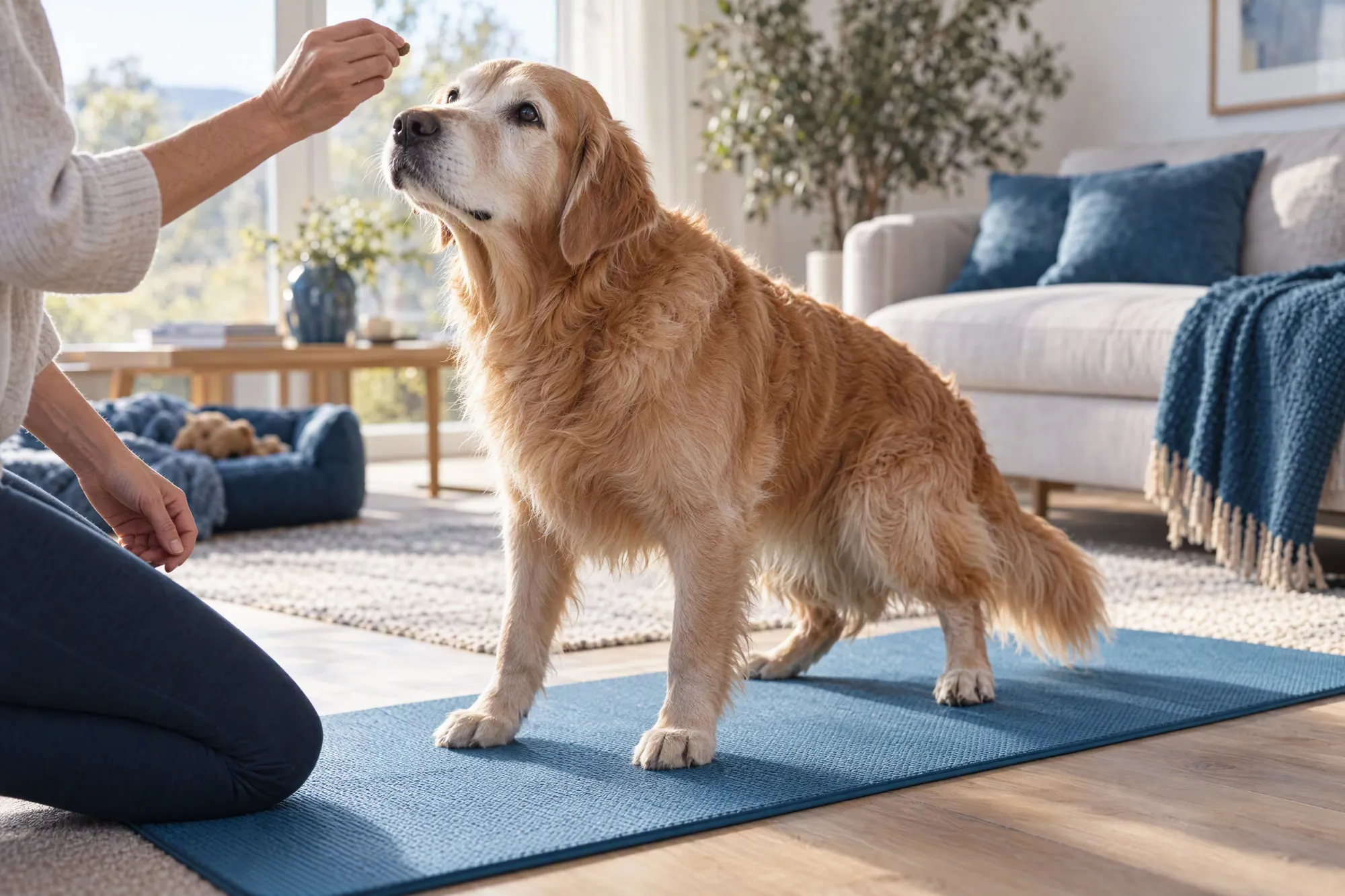
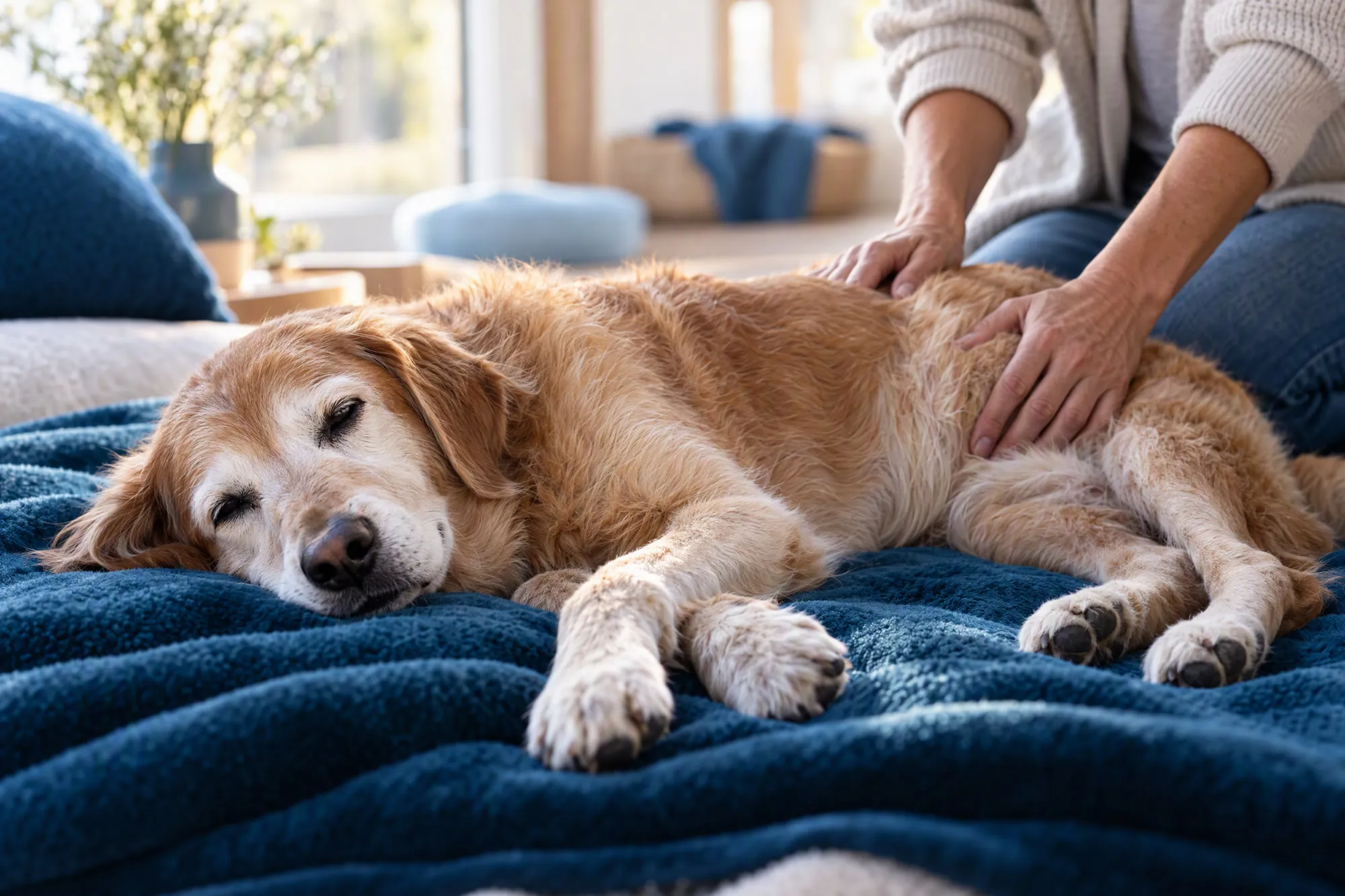
One or two sessions a week are not enough on their own: it is the daily routine that makes the difference. Your practitioner will give you a programme; in the meantime, you can take ideas from our gentle exercises for dogs with arthritis and our massage techniques for dogs with arthritis. If your dog is carrying extra weight, losing it multiplies the benefits of rehab: see how to help an overweight dog get back to a healthy weight.
Dog physiotherapy and hydrotherapy: key takeaways
Physiotherapy helps your dog move better and with less pain, both after an operation and over the long term with arthritis. The underwater treadmill builds muscle with less load on the joints, swimming maintains fitness without impact, and equipment-based therapies are add-ons. Always start from your vet’s diagnosis, choose a practitioner who sets clear goals and works with your vet, and keep up the exercises at home. You will find more advice in our dog exercise and mobility section.
Frequently asked questions
When can my dog start physio after cruciate ligament surgery?
Your surgeon sets the timetable, because it depends on the technique used and on how the wound is healing. Gentle range-of-motion work and short lead walks often start within the first few days, whereas hydrotherapy usually waits until the wound has fully healed. Ask for a written rehab plan when your dog is discharged.
Is hydrotherapy good for dogs with arthritis?
It often suits them well: the water carries part of the dog’s weight, so they can walk or swim with less discomfort and build muscle. The underwater treadmill is particularly useful because it keeps a normal walking pattern. It works best as part of an overall plan alongside weight control, any treatment your vet prescribes and exercises at home.
What is the difference between hydrotherapy and a spa bath for dogs?
Hydrotherapy means active work in water, on an underwater treadmill or in a pool, with a rehabilitation goal. Spa or whirlpool baths, sometimes marketed as balneotherapy, are mainly about relaxation or hygiene. The terms are occasionally used interchangeably, so always ask exactly what a session includes and who runs it.
How many physiotherapy sessions does a dog need?
It depends on the problem and on the goals set at the initial assessment. After orthopaedic surgery, a programme often lasts 6 to 12 weeks with one or two sessions a week. For a dog with arthritis, a closer-together initial block is common, followed by maintenance sessions further apart.
Does pet insurance cover dog physiotherapy and hydrotherapy?
Some pet insurance policies cover all or part of rehabilitation sessions, but the terms vary a great deal: a vet referral is usually required, there may be an annual limit, and conditions that started before the policy are often excluded. Check your policy or ask your insurer before you begin.
Do I need my vet’s permission for my dog to have physiotherapy?
Yes. In the UK, a non-vet can only treat an animal with the permission of a vet under the Veterinary Surgery (Exemptions) Order 2015, although this is not required for maintenance care of a healthy animal. In any case, only a vet can make the diagnosis, rule out reasons not to go ahead and prescribe pain medication. A good practitioner will ask for your dog’s records and keep your vet updated.
This article is for information only and does not replace a veterinary consultation. If in doubt, or if your dog is in pain or changes suddenly, contact your vet.
Sources and references
- Levine D. et al. Effects of partial immersion in water on vertical ground reaction forces and weight distribution in dogs (PMID 21117991)
- Pye C. et al. Current evidence for non-pharmaceutical, non-surgical treatments of canine osteoarthritis (PMID 37776028)
- Alves JC. et al. A randomized double-blinded controlled trial on the effects of photobiomodulation therapy in dogs with osteoarthritis (PMID 35895799)
- Pedersen A. et al. Effect of Transcutaneous Electrical Nerve Stimulation on Gait Parameters in Dogs with Osteoarthritis (PMID 38891673)
- European College of Veterinary Sports Medicine and Rehabilitation
- RAMP for Animal Owners and FAQs
- Association of Chartered Physiotherapists in Animal Therapy
- Canine Hydrotherapy Association: quality standards and member register