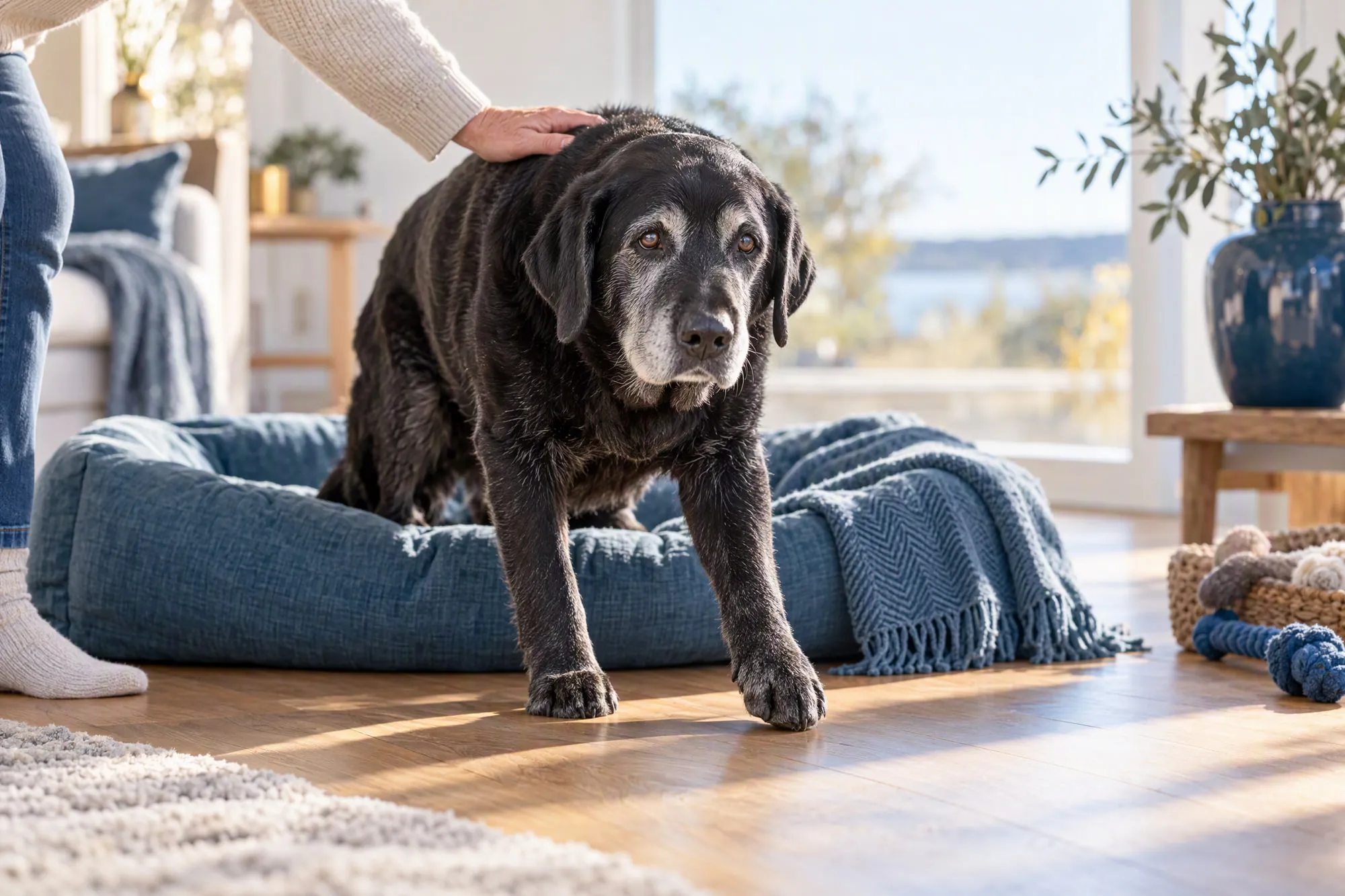
Senior dogs Symptom
Signs of pain in dogs: how to tell if your dog is hurting
Signs of pain in dogs: posture, face, breathing and behaviour. The acute and chronic pain signs to look out for, and when to see your vet urgently.

Key takeaways
- Dogs rarely show pain by crying out: mostly they change their habits (moving less, getting up slowly, keeping to themselves, becoming irritable or licking one particular spot).
- Physical signs to know: hunched posture, head held low, flattened ears, squinting eyes, panting at rest, trembling, limping or not wanting to be touched.
- Chronic pain, typical of arthritis, develops slowly and is often mistaken for ’just old age': a dog that is slowing down is often in pain.
- Crying out, a hard swollen belly, the ’prayer' position, a leg that no longer touches the ground or difficulty breathing all need an emergency vet visit.
- Never give human medicines: film your dog, note what you see and let your vet choose suitable pain relief.
Contents
The signs of pain in dogs are found less in crying out than in changes: a dog that is hurting moves less, gets up slowly, hesitates before jumping, keeps to themselves, pants at rest, licks one particular spot or reacts when touched. These signs are often subtle and come on gradually. Here is how to recognise them, tell acute pain from chronic pain, check your dog at home and know when to see a vet urgently.
Why your dog hides their pain
Dogs have inherited a survival instinct from their ancestors: showing weakness means making yourself vulnerable. Most dogs therefore adapt to pain rather than expressing it loudly. They shift their weight, cut their walks short, choose a different place to sleep. Because these changes happen slowly, it is easy to put them down to age, tiredness or personality.
The American College of Veterinary Surgeons (ACVS) points out that the signs can be very subtle, and some animals show almost nothing until the pain is severe. At the vet practice, stress and excitement mask the signs even more. You know your dog inside out, so you are best placed to notice that they are in pain.
Signs of pain in dogs, category by category
The table below sets out the signs described by Cornell University and the ACVS. A single sign on its own proves nothing; several signs, or a clear change from what is normal for your dog, should put you on alert.
| Area | Possible signs of pain |
|---|---|
| Movement | Limping, stiffness on getting up, difficulty sitting, climbing stairs or getting into the car, refusing to jump |
| Posture | Hunched back, head held low, tail carried differently, dog that stays standing or sitting instead of lying down |
| Face | Ears flattened back or drooping, squinting eyes, fixed or “glazed” stare, tense brow |
| Breathing | Panting at rest when it isn’t hot and they haven’t exercised, fast or shallow breathing |
| Activity | Restlessness, pacing, unable to get comfortable, or the opposite: listlessness and sleeping for longer |
| Behaviour | Keeping to themselves or seeking more contact, growling or shying away from touch, becoming irritable with other dogs |
| Body | Persistent licking or nibbling of one area, trembling, sharp reaction when a particular spot is touched |
| Habits | Reduced appetite, disturbed sleep, unusual toileting accidents, refusing walks or play |
| Voice | Whimpering, groaning when lying down or getting up, crying out when handled |
Acute pain or chronic pain: two different pictures
| Acute pain | Chronic pain | |
|---|---|---|
| Examples | Injury, fracture, surgery, slipped disc, abdominal pain | Arthritis, dysplasia, spondylosis, some dental disease |
| Onset | Sudden, linked to an event | Gradual, over weeks or months |
| Typical signs | Crying out, leg held up, refusing to move, panting, trembling | Slowing down, stiffness, irritability, disturbed sleep, playing less |
| Main risk | Missing an emergency | Mistaking the pain for “old age” |
As Cornell stresses, chronic pain no longer has a protective role: left untreated, it can make the nervous system more sensitive, so that the pain spreads and intensifies. The earlier it is spotted, the easier it is to control.
Reading your dog’s face and posture
A painful dog’s face often changes before their behaviour does. Compare with photos taken when they were well:
- The ears are flattened back or droop to the sides, without their usual mobility.
- The eyes are squinting or half closed, or the gaze seems blank and distant.
- The forehead and muzzle look tense; some dogs keep their mouth tightly closed instead of slightly open and relaxed.
Posture also gives clues to where the pain is coming from. A hunched back with the head held low often suggests back or abdominal pain. The “prayer” position, front end down and hindquarters raised, can signal abdominal pain. A dog that shifts their weight forwards or to one side is often protecting a leg or a hip. If your dog holds their back rounded, won’t lower their head to their bowl or cries out when moving their neck, think about the back: our article on IVDD in dogs explains these warning signs.
Is a dog that is panting or shaking in pain?
Panting at rest
Dogs normally pant after exercise, when they are hot or when they are excited. Panting at rest, in a cool room, especially at night, together with restlessness or frequent changes of position, is one of the classic signs of pain. But it can also reflect stress, fever, heart or respiratory disease, or a hormonal disorder. It is the combination with other signs that points the way.
Shaking and trembling
The ACVS lists trembling among pain behaviours. A dog that trembles while standing still with a hunched back, or whose leg shakes when bearing weight, may be in pain. Cold, fear, excitement, muscle weakness in older dogs and some illnesses (neurological or metabolic disease, poisoning) can also cause trembling. Trembling together with lethargy, vomiting or an abnormal gait means you should see your vet promptly.
Chronic pain: the subtle everyday signs
The most common chronic pain in dogs is that of arthritis. It develops so slowly that we get used to it. Ask yourself these questions about the last few weeks:
- Do they take longer to get up in the morning or after a nap, then “loosen up”?
- Do they hesitate before jumping into the car or onto the sofa?
- Do they walk behind you on walks instead of out in front?
- Do they sit lopsided, with one back leg stuck out to the side?
- Do they often lick a wrist, a knee or a hip?
- Do they grumble when you brush them, lift them or touch their back?
- Are they playing less, sleeping more, less patient with other dogs?
If you answer yes to several of these, talk to your vet. Our article on the old dog struggling to stand up explains the causes of this very common sign, and the one on dog limping helps you tell a minor limp from an emergency.
When pain changes a dog’s temperament
An international team of behaviour specialists reviewed 100 of their recent consultations for behaviour problems in dogs: by an estimate they consider conservative, around a third of cases involved a painful condition, and up to almost 80% in some of their caseloads (Mills et al., 2020). A new fear of stairs, reacting to being touched, irritability with other dogs, house-soiling: before treating it as a training issue, always think of pain.
Checking your dog at home, step by step
The 2022 AAHA guidelines stress the importance of assessment by the owner, particularly for chronic pain: vets even use validated questionnaires that you fill in yourself. Here is a simple method to prepare for your appointment.
- Watch without intervening for a few minutes: how do they lie down, get up, walk? Do they keep changing position?
- Film the key moments: getting up in the morning, the stairs, getting into the car, the start of the walk. These videos are often worth more than a long description.
- Compare with older videos or photos: posture, expression, walking speed.
- Touch gently, without forcing, starting well away from the suspected area. Stop as soon as they tense up, turn round, whimper or growl: a dog in pain may bite, even if they are very gentle.
- Keep a daily diary for one to two weeks: appetite, sleep, length of walks, willingness to play, episodes of panting or limping.
What your vet will do
Your vet will examine your dog from nose to tail: gait, feeling each joint and the back, examining the abdomen, teeth and skin, and a neurological examination if needed. Depending on what they find, they may suggest X-rays, a blood test or other investigations.
When pain is likely but its cause isn’t obvious, your vet may suggest a trial of pain relief for a few days or weeks. If your dog changes noticeably (getting up more easily, playing again, becoming sociable again), that is valuable information: they were in pain. International guidelines from WSAVA and AAHA favour a multimodal approach that combines several measures: suitable medication, weight management, controlled exercise, physiotherapy and changes around the home. If your dog has arthritis, our guide to anti-inflammatories for dogs with arthritis explains the options before you start.
While you wait for the appointment: what to do
- Settle your dog somewhere quiet on a thick, comfortable bed, away from draughts, on a non-slip floor.
- Limit their movement: short lead walks for toilet breaks only, no stairs, no jumping.
- Keep water within reach and offer their usual meals.
- Avoid handling or lifting them abruptly.
- Don’t apply heat or cold to an area without your vet’s advice if it is swollen or hot, or if the cause of the pain isn’t known.
Signs of pain in dogs: key points
A dog in pain doesn’t always complain: they change. Trust your knowledge of your dog, watch their body, face and habits, and film and note what you see. If in any doubt, see your vet: pain is easier to treat the earlier it is spotted, and many dogs thought to be simply “old” regain their zest for life once their pain is managed. Find our advice on caring for a senior dog day to day.
Frequently asked questions
Do dogs cry when they are in pain?
Sometimes, but not always. Whining, yelping or crying out are mainly seen with sudden, severe pain, or when the sore area is touched. With chronic pain, most dogs stay quiet and instead change the way they move and behave.
My dog is panting at night: are they in pain?
Possibly. Panting at rest, when it isn’t hot and they haven’t been exercising, in a dog that keeps shifting position or can’t settle, is one of the signs of pain. It can also be caused by stress or by heart, respiratory or hormonal disease: a vet examination is the way to tell the difference.
How can I tell if my older dog is in pain or just getting old?
Ageing alone slows a dog down a little, but it doesn’t stop them getting up, jumping into the car or enjoying their walks. Stiffness on getting up, hesitating before jumping, shorter walks or irritability are often signs of pain, particularly arthritis. If your dog seems years younger on pain relief prescribed by your vet, they were in pain.
What can I give my dog for pain while waiting to see the vet?
Nothing from your medicine cabinet: paracetamol, ibuprofen, aspirin or ketoprofen can be seriously toxic to dogs. Keep your dog calm on a comfortable bed, limit their movement and phone your vet, who will tell you whether you need to come in straight away.
Can a dog in pain become aggressive?
Yes. A dog in pain may growl, show their teeth or bite when touched, lifted or brushed, even if they are normally very gentle. Behaviour specialists estimate that a significant proportion of dogs seen for behaviour problems have a painful condition: a change in temperament always warrants a check-up.
This article is for information only and does not replace a veterinary consultation. If in doubt, or if your dog is in pain or changes suddenly, contact your vet.
Sources and references
- Recognizing pain in dogs
- Pain Management
- Global Guidelines for the Recognition, Assessment and Treatment of Pain
- 2022 AAHA Pain Management Guidelines for Dogs and Cats (Gruen et al.)
- Pain and Problem Behavior in Cats and Dogs (Mills et al.)