Joints & mobility Practical tips
Dog arthritis in cold weather: why winter brings back the stiffness and how to help
Dog arthritis in cold weather: why your dog is stiffer in winter, the signs to watch for and 10 simple steps (coat, bed, walks) to keep your dog comfortable.
Key takeaways
- Many dogs with arthritis seem stiffer in winter: cold makes tissues less supple, and above all, dogs move less, slip more and often put on weight.
- The research is nuanced: around two in three people with osteoarthritis say they are sensitive to the weather, but the measured effect of weather on pain is modest and varies from person to person.
- The steps that matter most: a thick, warm bed, a 5-minute warm-up indoors, shorter but more frequent walks, and a thorough towel-dry when you get home.
- A coat is useful for short-coated, small, thin or older dogs, and for any dog that walks slowly in cold, damp weather.
- Stiffness that no longer wears off after a few minutes' walking, a new limp or a dog that refuses to go out all justify a vet check, without waiting for spring.
Contents
Yes, dog arthritis often seems worse in cold weather: many dogs with arthritis become stiffer and less enthusiastic as soon as the cold and damp set in. There is no evidence that cold damages cartilage further, but it makes tissues less supple, and winter cuts down activity, increases slips and encourages weight gain. The good news: around ten simple steps, set out below, are often enough to make this season far more comfortable.
Why winter brings out dog arthritis
Arthritis in dogs is a chronic disease: the cartilage wears, the joint stiffens and becomes painful. It progresses slowly, all year round. What changes in winter is mainly how your dog feels it and copes with it.
What the research says about cold and damp weather
The link between weather and joint pain is a very widespread belief, and science partly backs it up, with some nuances:
- In people, a large European study carried out in six countries found that 67% of older people with osteoarthritis said they were sensitive to the weather, and these people reported more pain than the others.
- A British study of more than 2,600 people with chronic pain, followed day by day through a smartphone app, measured a real but modest link between pain and relative humidity, air pressure and wind.
- In dogs, data are scarce. A study of 62 dogs with osteoarthritis fitted with activity monitors (accelerometers) found no clinically important effect of temperature, humidity or air pressure on their daily activity, or on their owners’ assessment of pain.
In practice, this means every dog reacts in its own way. Some are clearly stiffer in cold, damp weather; others don’t seem bothered. What is certain, however, is that winter changes a dog’s lifestyle, and that is often where the difference lies.
The likely mechanisms
| What changes in winter | Possible effect on a dog with arthritis | What you can do |
|---|---|---|
| Low temperatures | Less supple muscles and tissues, a dog that tenses up or shivers | Warm-up, coat, warm bed |
| Damp, rain | Wet coat that insulates poorly, chilling after the walk | Thorough towel-dry on your return |
| Short days, bad weather | Walks cut short or skipped, muscle loss | Several short outings, indoor activities |
| Ice, mud, wet leaves | Slips, awkward movements, painful flare-ups | Safe routes, short lead, short nails |
| Less exercise, same food | Weight gain that overloads the joints | Weigh your dog, adjust the ration |
| Long nights without moving | More stiffness on getting up | Bed raised off the floor, gentle loosening up |
Signs that the cold is affecting your dog’s joints
Dogs don’t show pain the way we do. In cold weather, look out in particular for:
- a dog that is stiff in the morning and takes longer than before to loosen up;
- reluctance to go out, get into the car or use the stairs;
- a shorter stride, or a limp that appears at the start of a walk and then fades;
- a dog that lags behind you, stops often or wants to go home very quickly;
- difficulty getting up after a nap by the door or on a cold floor;
- persistent licking of a joint, or irritability when handled;
- shivering, a hunched back, a dog that always seeks out the radiator.
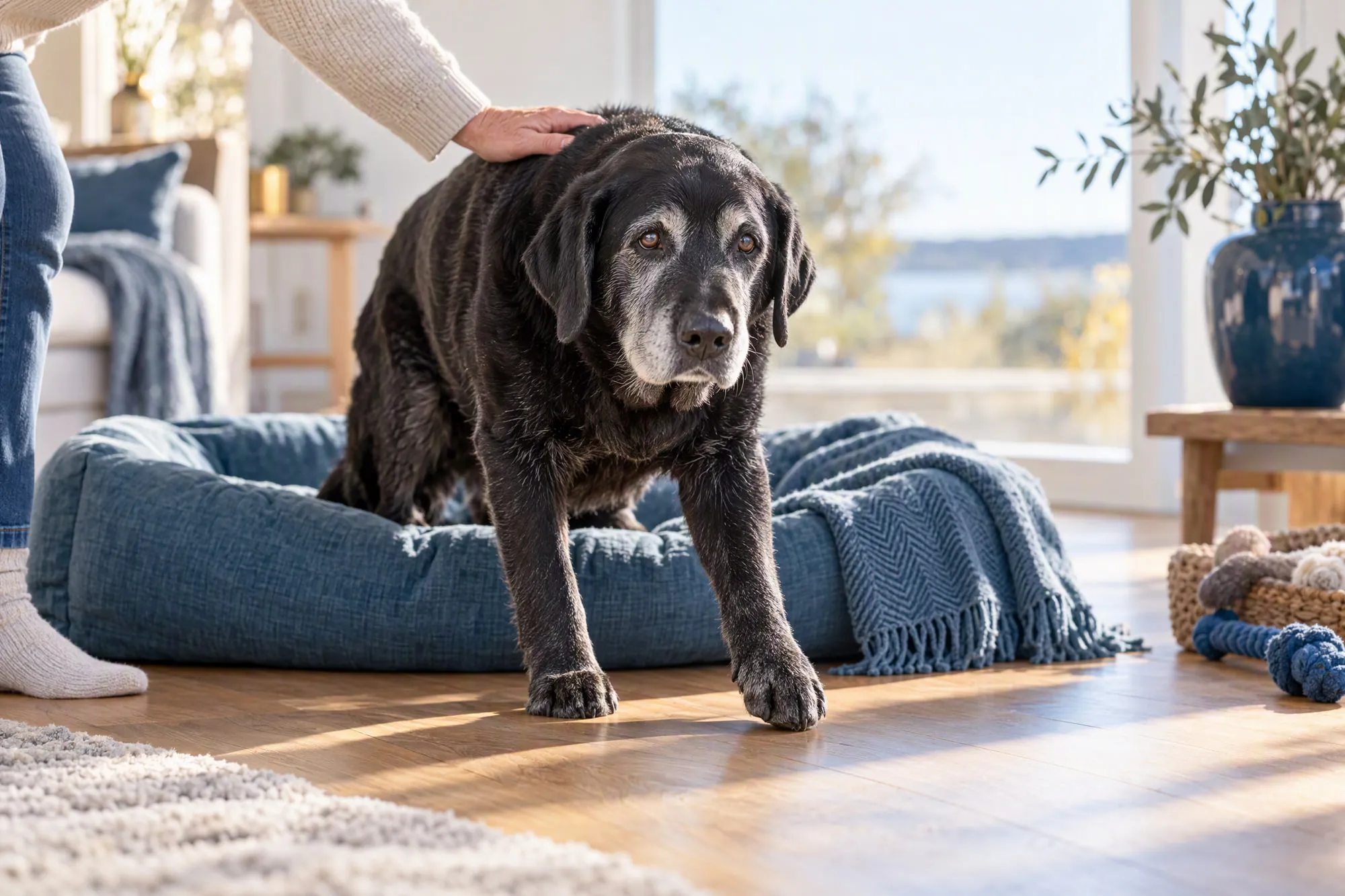
If your dog finds it harder and harder to leave its bed, our advice for an old dog struggling to stand up will help you tell passing stiffness apart from a more serious problem.
10 ways to help a dog with arthritis in cold weather
1. A thick, warm bed raised off the floor
This is the priority. A firm orthopaedic bed, placed on a rug or slightly raised, away from doors, patio windows and cold tiled floors. Add a fleece blanket your dog can dig at and arrange. Don’t put the bed right up against a radiator, though: your dog must be able to move away if too warm.
2. A coat when it helps
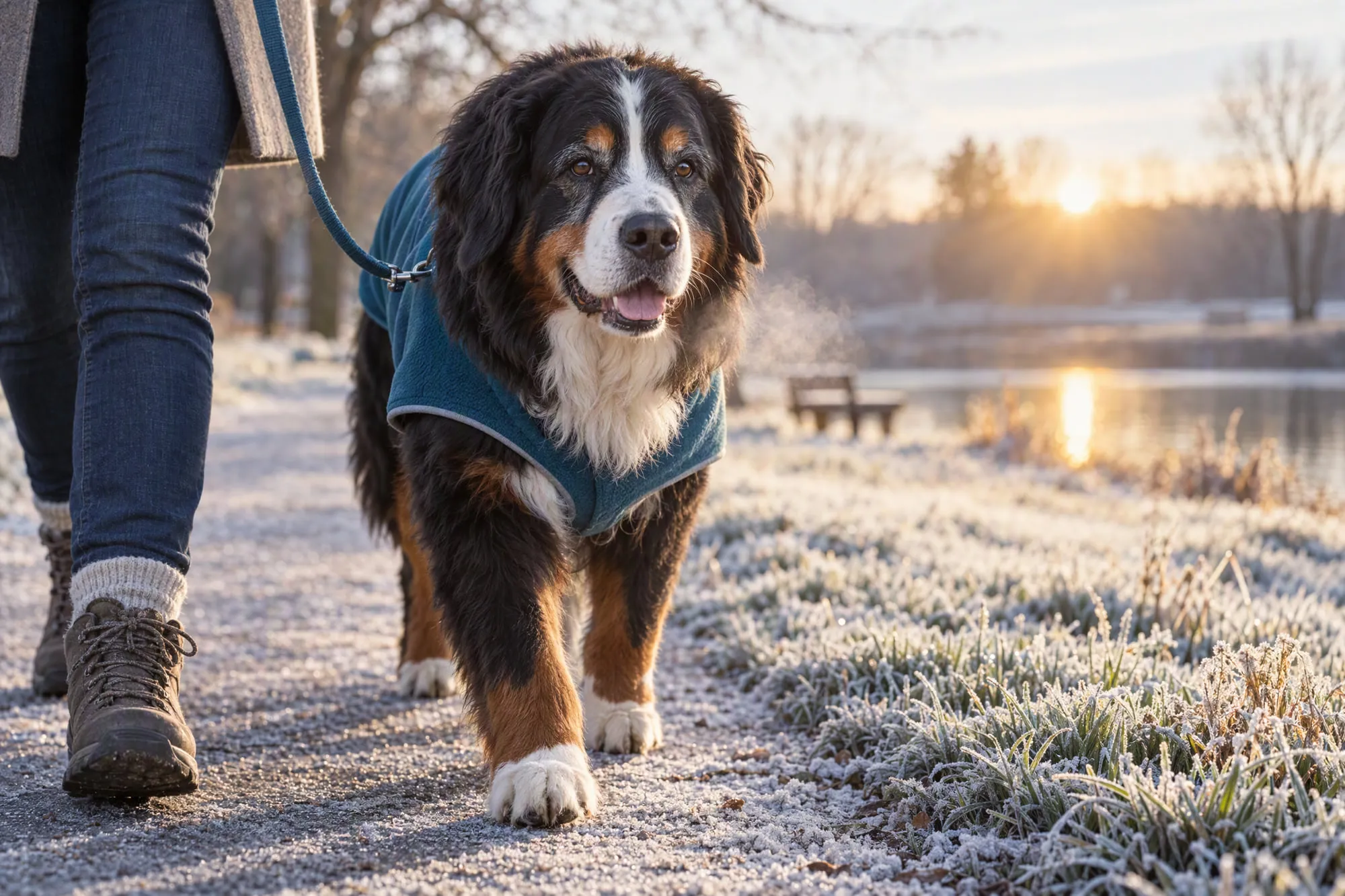
A coat for an older dog is not a gimmick. It is particularly useful for short-coated dogs or those without an undercoat, small dogs, thin dogs and seniors that walk slowly and so don’t warm up much. Even a long-coated dog benefits in cold, rainy weather, because a wet coat insulates far less well. Choose one that:
- covers the back and loins well, an area that is often stiff in dogs with arthritis;
- goes on without lifting the legs or putting strain on the shoulders (fastening under the belly or at the side);
- doesn’t rub under the armpits and leaves the hips free.
3. A warm-up indoors before every walk
Taking a stiff dog straight out into the cold means its first steps are on ‘cold’ joints. A few minutes at home make a real difference.
Winter loosen-up before a walk
- Walk your dog slowly around the house for 2 to 3 minutes, on a non-slip floor (a hallway with a runner, the living room).
- Make a few wide turns in both directions, always at a walk.
- Ask for 3 to 5 slow sit-to-stands, with a treat in front of the nose, if your dog can do them easily.
- Slowly stroke the thighs, the shoulders and along the back for 1 minute, from top to bottom.
- Put the coat on and head out straight away, starting with 5 minutes at a gentle walk.
Good to know: if your dog is very stiff, first place a warm (never hot) hot water bottle wrapped in a towel on the hips or back for 10 minutes, staying close by.
4. Shorter, more frequent walks at the mildest times of day
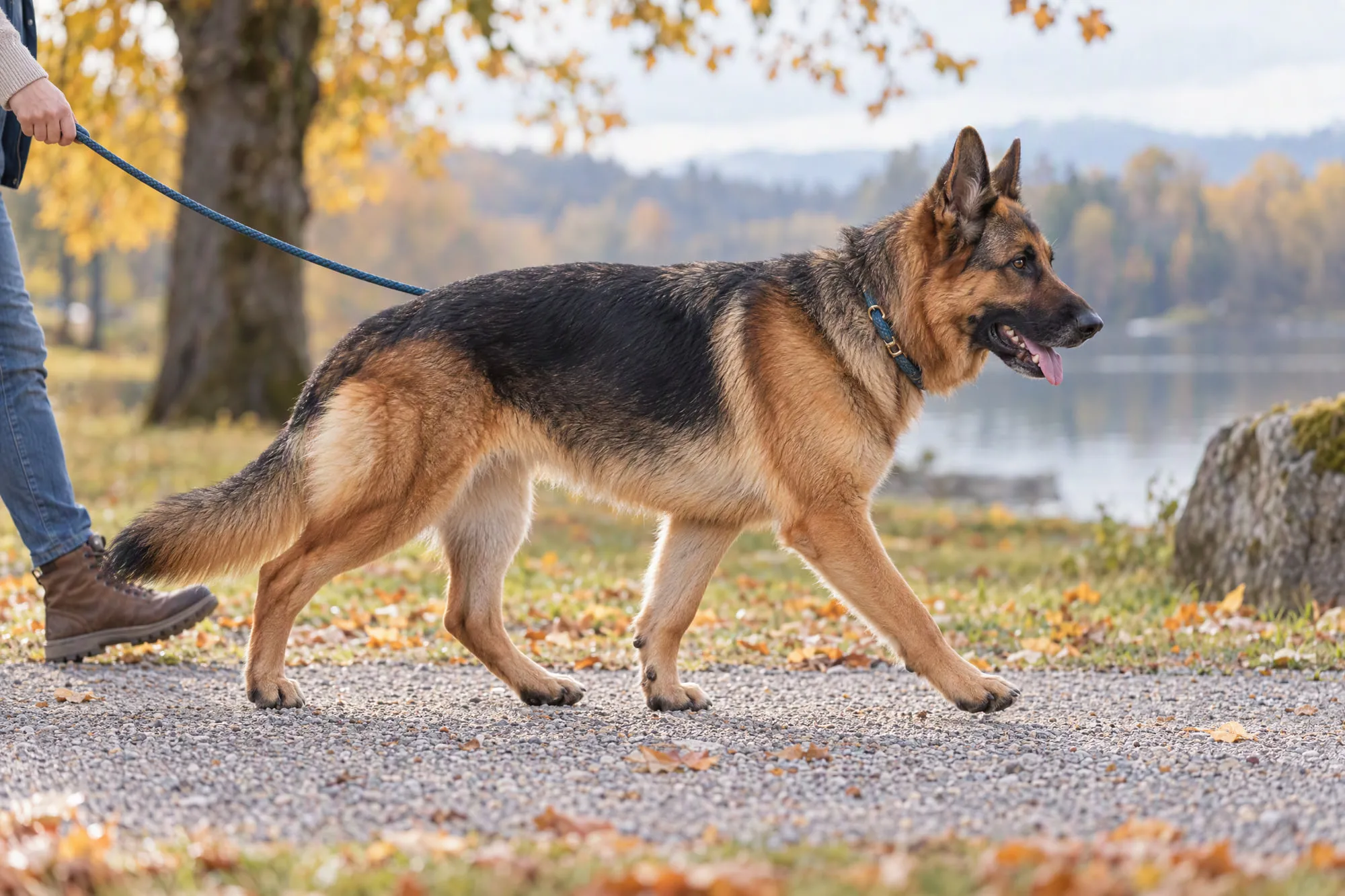
Three 15-minute walks are better than an hour in the cold. Make the most of the middle of the day, which is milder and brighter, for the longest walk. Keep early-morning and evening outings short. Walk at a steady pace, on the lead, with no ball games or sprints: the cold doesn’t make joints any tougher against impact.
5. Dry and warm up when you get home
A wet dog that lies down straight away chills quickly.
Post-walk routine
- Take the coat off and towel your dog dry with an absorbent towel, paying particular attention to the belly, legs and hindquarters.
- Rinse the paws in lukewarm water if the pavements were gritted, then dry carefully between the toes.
- Check the pads: cracks, small cuts, balls of ice or snow stuck between the toes.
- Offer water, then let your dog settle on a warm bed.
- If you are used to doing it, finish with 3 to 5 minutes of slow strokes over the thigh and back muscles.
Good to know: avoid using a hairdryer that is too hot or too close, as it can burn the skin. A microfibre towel is enough in most cases.
6. Watch out for ice, mud and slippery floors
A single slip can trigger a painful flare-up lasting several days. Choose clear routes and avoid icy patches, muddy slopes and wet leaves. Keep your dog on a short lead on tricky stretches, with a harness rather than a collar. At home, floors that are wet after a walk are a trap too: an absorbent, non-slip mat by the door is very useful. Finally, keep your dog’s nails short for better grip.
7. Protect the paw pads and avoid toxic products
Road salt and grit irritate and dry out the pads. Rinse the paws when you get home and apply a paw balm if needed. Above all, beware of car antifreeze: the ethylene glycol it contains has a sweet taste that attracts dogs, and a very small amount can cause serious poisoning.
8. Keep your dog active when the weather is too bad
On stormy or bitterly cold days, don’t cut out activity: move it indoors. A few exercises for dogs with arthritis, a figure-of-eight walk in the living room or sniffing games (treats hidden in a rolled-up towel or in cardboard boxes) keep up muscle and morale without going out.
9. Keep an eye on the scales
Fewer walks with the same food allowance almost guarantees weight gain by the end of winter. And every extra kilo overloads the hips, knees and elbows. Weigh your dog once a month, reduce the ration slightly if activity drops, and count the treats. For more, see our guide to overweight dogs and joint health, which explains how to keep your dog at a healthy weight.
10. Gentle heat and massage
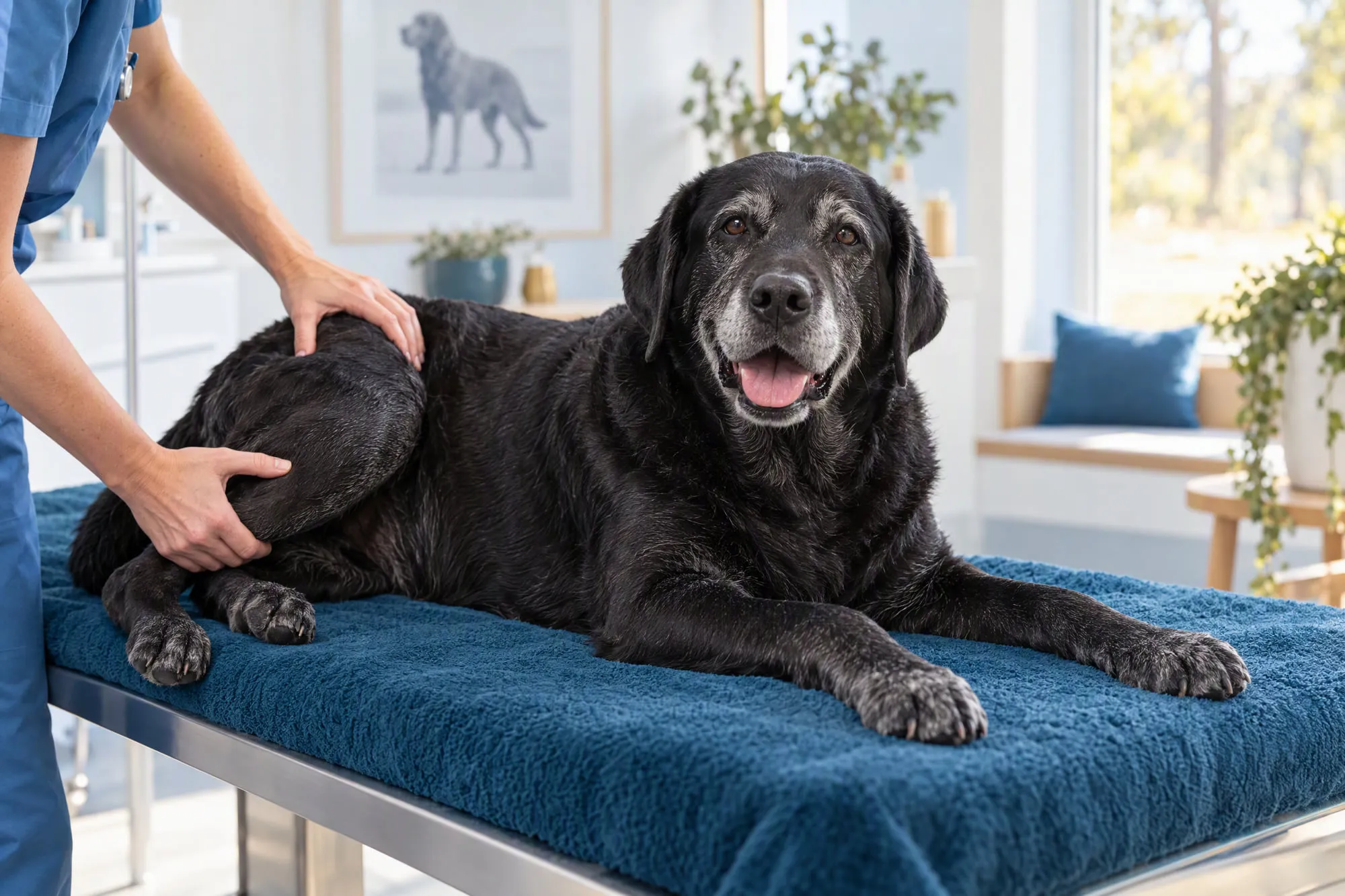
Gentle heat and a few minutes of massage in the evening relax the muscles that are compensating for pain. Follow one simple rule: gentle warmth on everyday stiffness, never on a hot, swollen joint. All the techniques are explained in our guide to massage for dogs with arthritis.
Rain, snow, wind: adapting walks to the weather
| Weather | What causes problems | Our advice |
|---|---|---|
| Dry, sunny and cold | Stiffness at the start | Indoor warm-up, coat for dogs that feel the cold, walk in the middle of the day |
| Rain and damp | Wet coat, chilling | Waterproof coat, shorter walk, thorough towel-dry on your return |
| Light fresh snow | Tiring more quickly | Compacted paths, shorter walk, paws rinsed and dried |
| Deep snow | Legs lifted high, heavy effort | Very short walks, stick to cleared areas |
| Ice | Slips and falls | Minimal outing for toilet needs, short lead, harness, gritted areas |
| Cold wind | Chilling quickly | Sheltered route, a coat that covers well |
When the warmer days return, don’t suddenly increase walks: get your dog used to longer outings gradually, over two to three weeks.
Preparing for winter with your vet
Autumn is a good time to review your dog’s arthritis. At this appointment, your vet can:
- assess pain and mobility, and compare them with the last check-up;
- adjust the treatment if stiffness increases with the cold: pain medicines should never be changed or added without your vet;
- check your dog’s weight and suggest a food allowance suited to lower activity;
- refer you to a rehabilitation professional, which can be useful in winter when walks are limited.
As part of an overall approach, alongside weight management, suitable exercise and veterinary follow-up, a complementary feed such as Novalia Hip & Joint can contribute to supporting joint function during the colder months, provided it is given regularly for at least 6 to 8 weeks.
Key points on dog arthritis in cold weather
There is no evidence that cold makes arthritis progress, but it highlights stiffness that was already there. A warm bed, a five-minute warm-up, shorter and more frequent walks, a thorough towel-dry when you get home and an eye on the scales: these simple habits help many dogs get through winter while still wanting to move. And if your dog changes despite everything, don’t wait for spring to talk to your vet. Find more advice in our dog joint health section.
Frequently asked questions
Does cold weather make arthritis worse in dogs?
There is no evidence that cold makes cartilage damage progress faster, but it often increases stiffness and discomfort. Winter also brings several unhelpful factors together: less activity, slippery ground, longer nights without moving and weight gain. Together, these explain why many dogs with arthritis seem worse from November to March.
Should my old dog wear a coat in winter?
A coat is a good idea for short-coated dogs or those without an undercoat, small dogs, thin dogs and seniors that walk slowly. Even a long-coated dog can benefit in cold, wet weather, because a wet coat insulates far less well. Choose one that covers the back and loins, is easy to put on and doesn’t restrict the shoulders.
Can a dog with arthritis walk in the snow?
Yes, fresh, shallow snow is generally not a problem, but deep snow forces your dog to lift the legs high and quickly tires the joints. Stick to compacted paths, shorten the walk and rinse the paws when you get home if pavements have been gritted. Avoid icy patches at all costs.
Why is my dog with arthritis stiffer in the morning in winter?
After a night without moving, arthritic joints are always stiffer, and a cold bed or one in a draught makes this morning stiffness worse. Stiffness that wears off within a few minutes of walking is typical of arthritis. If it lasts longer or gets worse week by week, the pain is probably not well controlled: talk to your vet.
Can I give my dog a painkiller when it’s cold?
Never on your own initiative, and never a human medicine: paracetamol, ibuprofen or aspirin can be very toxic to dogs. If your dog is in more pain in winter, your vet can reassess and adjust the treatment. This is exactly the right time for a check-up before the coldest weather arrives.
This article is for information only and does not replace a veterinary consultation. If in doubt, or if your dog is in pain or changes suddenly, contact your vet.
Transparency: Novalia develops and sells a complementary feed for dogs. Our articles stay independent: the product is only mentioned where relevant, always clearly labelled, and never in place of veterinary advice.
Sources and references
- Arthritis in Dogs
- Katz EM. et al. Evaluation of the Environmental Bias on Accelerometer-Measured Total Daily Activity Counts and Owner Survey Responses in Dogs with Osteoarthritis (PMID 29202500)
- Timmermans EJ. et al. Self-perceived weather sensitivity and joint pain in older people with osteoarthritis in six European countries (EPOSA)
- Dixon WG. et al. How the weather affects the pain of citizen scientists using a smartphone app
- Senior Dog Care - Special Considerations
- Ethylene Glycol Poisoning in Dogs